


[Continuing the Spring Story] Promoting the Development of the Greater Bay Area: Guangdong Joins Hands with Hong Kong and Macao to Accelerate the Building of a World-Class Bay Area and a Global Metropolitan Cluster.
The construction of the Guangdong-Hong Kong-Macao Greater Bay Area is a major national strategy personally conceived, planned, and promoted by General Secretary Xi Jinping. In recent years, Guangdong Province has mobilized the entire province to vigorously advance the development of the Greater Bay Area. As a result, scientific and technological innovation resources have been rapidly concentrated, infrastructure has achieved "hard connectivity," and rules and mechanisms have undergone "soft alignment." The "one-hour living circle" is accelerating its formation, making daily life and development more convenient for residents. Major cooperation platforms are being expedited, and the radiating and driving effects of Guangzhou and Shenzhen are proving highly effective... The Greater Bay Area's overall strength has significantly enhanced, offering people living in this region even greater opportunities for development and brighter prospects.
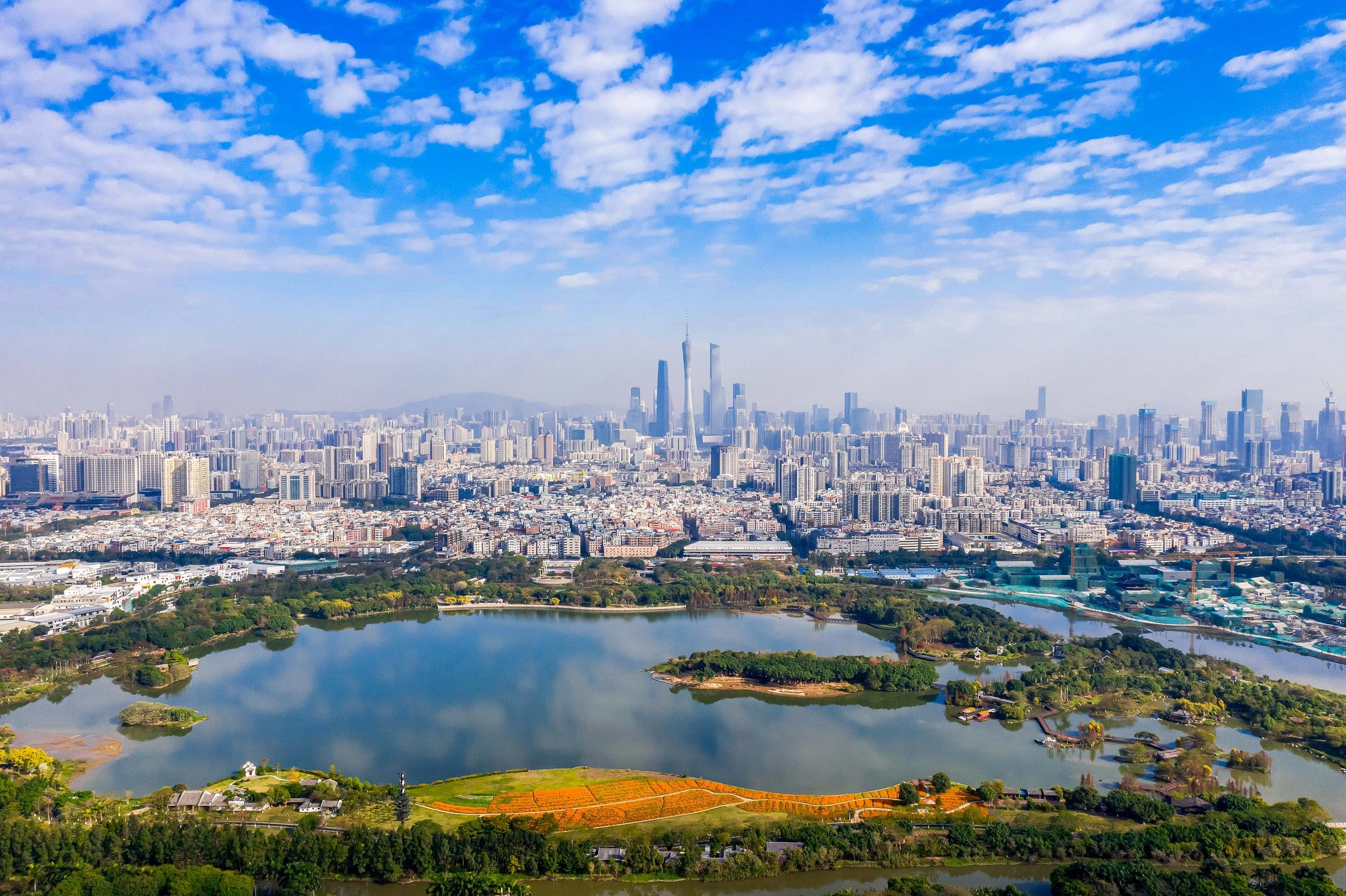
Technological innovation resources in the Guangdong-Hong Kong-Macao Greater Bay Area are accelerating their concentration.
The Guangdong-Hong Kong-Macao Greater Bay Area is taking up the banner of "self-reliance and self-strengthening in science and technology," accelerating its journey toward becoming a world-class innovation and technology hub. With a focus on building the Greater Bay Area into a comprehensive national science center, Guangdong is promoting the strategic layout of innovation platforms along the “two corridors”—Guangzhou-Shenzhen-Hong Kong and Guangzhou-Zhuhai-Macao—and at the “two points”—Shenzhen River Delta and Zhuhai Hengqin.
The sharing and circulation of science and technology innovation resources are crucial for building a collaborative innovation ecosystem in the Guangdong-Hong Kong-Macao Greater Bay Area. Mainland cities in the Greater Bay Area are actively opening their doors to innovative resources, promoting the open and shared access of major scientific facilities and key laboratories to Hong Kong, Macao, and the global community. Among these efforts, the China Spallation Neutron Source has begun operation, and during the 14th Five-Year Plan period, five major scientific and technological infrastructures are scheduled for construction—placing Guangdong at the top nationwide in terms of the number of such projects. Ten Guangdong Provincial Laboratories and 20 Guangdong-Hong Kong-Macao joint laboratories are operating smoothly, attracting numerous domestic and international academicians and scientists as well as research institutions from Hong Kong and Macao. Furthermore, Hong Kong and Macao universities and research institutions are encouraged to participate in Guangdong’s fiscal science and technology programs; cross-border disbursements of fiscal funds for provincial and municipal research projects have exceeded 300 million yuan, benefiting more than ten universities and research institutions in Hong Kong and Macao.
Currently, the Guangdong-Hong Kong-Macao Greater Bay Area boasts the largest number of incubators and makerspaces in China. It also ranks first nationwide in both the number of valid invention patents and the number of valid PCT international patent applications. The “Shenzhen-Hong Kong-Guangzhou” innovation cluster has retained its second-place ranking in the global top 100 innovation clusters.
After years of deep integration and development, the Guangdong-Hong Kong-Macao Greater Bay Area has pioneered a collaborative model for the development of science and technology industries—“Hong Kong and Macao universities—research achievements from Hong Kong and Macao—transformation in the Pearl River Delta.” Major research achievements from Hong Kong and Macao, such as DJI’s drones, have been smoothly transformed and implemented in the Pearl River Delta, fostering the emergence of several new industrial clusters in fields like artificial intelligence and ultra-high-definition video.
A new system for an open economy is accelerating its formation.
When governance is smooth, the people will be harmonious; when the people are harmonious, industries will thrive. Guangdong is taking the “Bay Area Connect” initiative as a key driver to continuously deepen the alignment of rules and the integration of mechanisms among Guangdong, Hong Kong, and Macao, thereby accelerating the establishment of a new open economic system.
Under the CEPA framework, Guangdong has implemented a shorter negative list for Hong Kong and Macao, essentially achieving liberalization of trade in services with these regions. Enterprises from Hong Kong and Macao enjoy national treatment when investing and doing business in fields such as law, accounting, and construction. Business registration for enterprises from Hong Kong and Macao has been streamlined to “one-stop online service,” and the time required to set up a business has been reduced to within one working day.
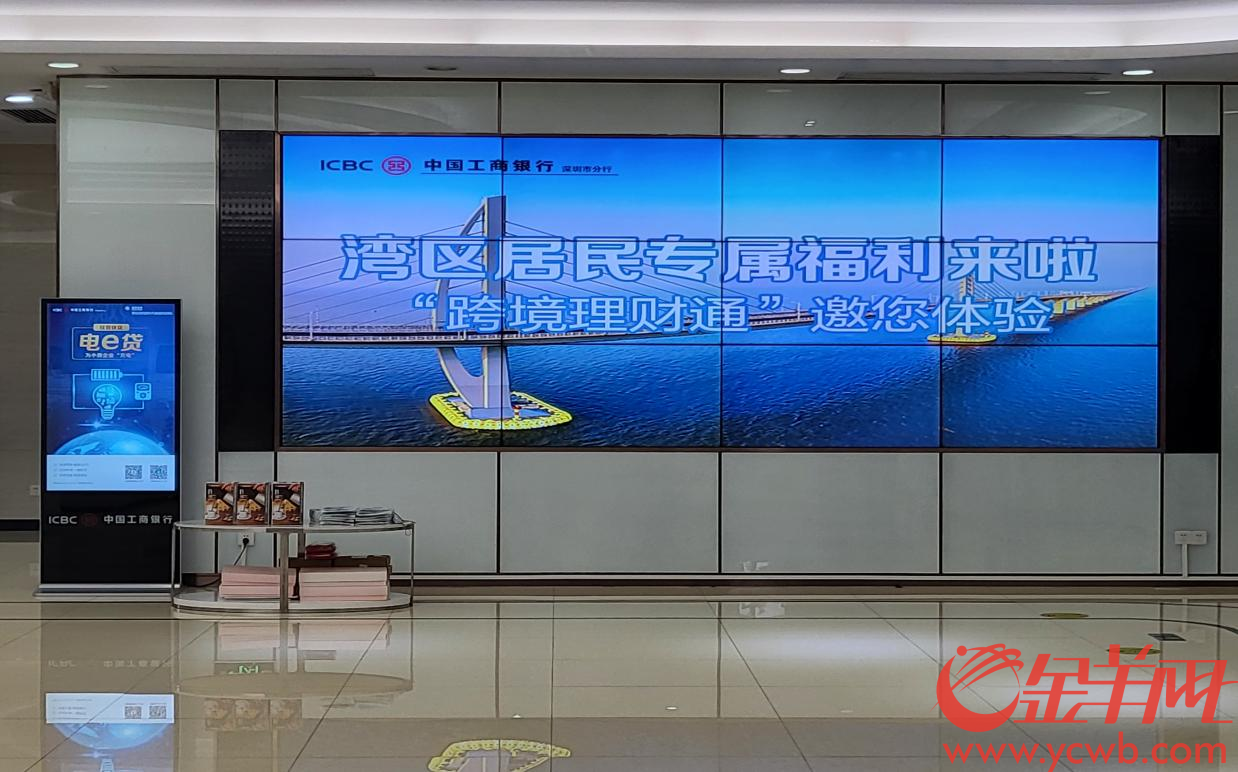
Guangdong, together with Hong Kong and Macao, is steadily advancing the interconnection of financial markets. Measures such as the “Shenzhen-Hong Kong Stock Connect,” the “Southbound Bond Connect,” and the “Cross-border Wealth Management Connect” have been successfully implemented, making the renminbi the largest settlement currency for cross-border payments among Guangdong, Hong Kong, and Macao. Over 180,000 personal bank accounts in mainland China have been opened by residents of Hong Kong and Macao through agency witnessing services. Moreover, mobile payment applications—including the UnionPay Hong Kong and Macao versions of the “Cloud QuickPass” app, as well as Hong Kong e-wallets on WeChat and Alipay—have been expanded, making it even more convenient for residents of the Greater Bay Area to access cross-border financial services.
Adopting a multi-pronged approach, Guangdong continues to expand the scope of professional qualification recognition and standards alignment. In eight sectors—including physicians, teachers, tour guides, and others—unilateral recognition is driving mutual recognition in both directions, enabling over 3,100 professionals from Hong Kong and Macao to obtain mainland registration and practice qualifications. Efforts are also underway to develop the first batch of “Greater Bay Area Standards,” covering 70 standards across 23 sectors, including food and Cantonese cuisine.
The formation of high-quality living circles is accelerating.
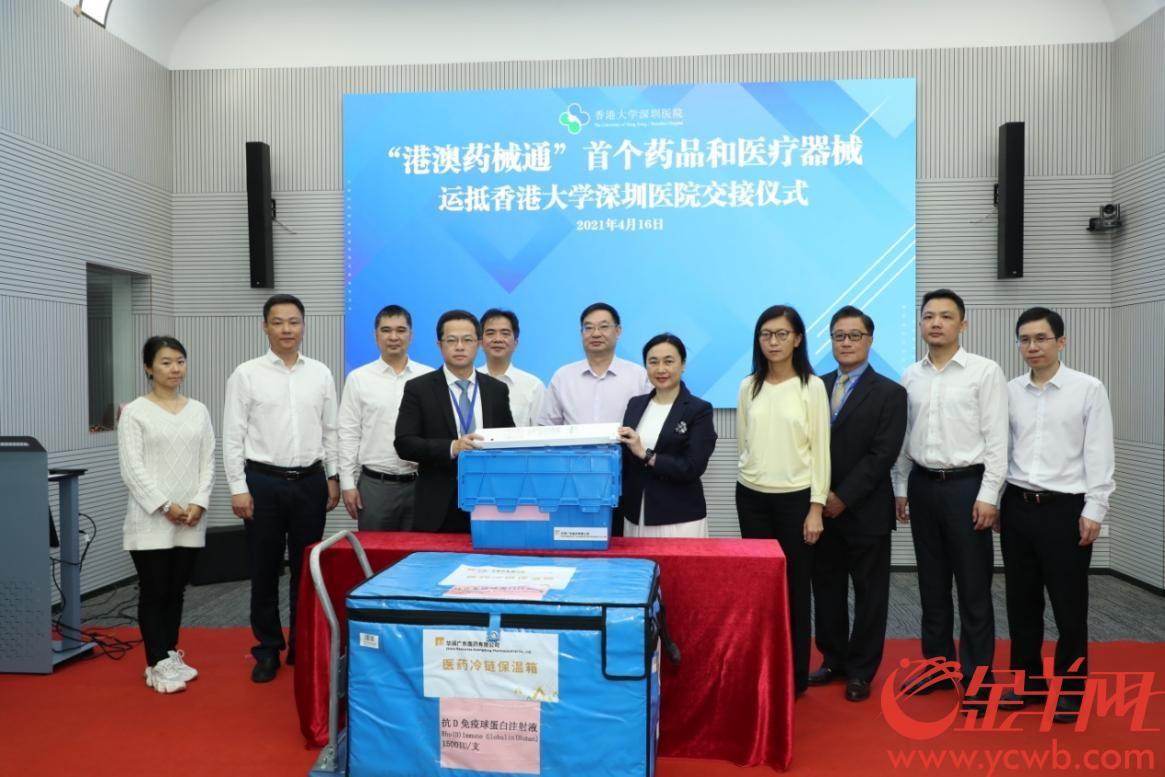
Guangdong, together with Hong Kong and Macao, is making concerted efforts to promote cooperation on people’s livelihoods. As a result, it has become even more convenient for residents of Hong Kong and Macao to live and develop in Guangdong, and a high-quality living circle—characterized by livability, workability, and tourism appeal—is accelerating its formation. A series of policy measures have been introduced in areas such as housing, education, healthcare, and social security, which are highly regarded by residents across the three regions, benefit a wide range of people, and wield significant influence. In terms of housing, policies facilitating home purchases by Hong Kong and Macao residents in the Guangdong-Hong Kong-Macao Greater Bay Area have been put into practice, exempting them from providing certain supporting documents and allowing them to use cross-border mortgage loans from Hong Kong and Macao banks in accordance with regulations. In education, policies ensuring that Hong Kong and Macao residents and their accompanying children enjoy equal access to preschool education, compulsory education, senior secondary education, and opportunities to take the Chinese College Entrance Examination and the High School Graduation Examination have been fully implemented. In healthcare, the pilot program “Hong Kong and Macao Pharmaceuticals and Medical Devices Access” has been launched, enabling eligible medical institutions in the Guangdong-Hong Kong-Macao Greater Bay Area to use pharmaceuticals and medical devices already approved for sale in Hong Kong and Macao, as per established regulations. In terms of social security, the “Greater Bay Area Social Security Mutual Recognition” policy has been rolled out. By the end of 2021, the cumulative number of Hong Kong and Macao residents participating in pension, unemployment, and work-related injury insurance in Guangdong had reached 279,200 person-times.
To attract more young people from Hong Kong and Macao to seek employment in Guangdong, the province has completely abolished the employment permit requirement for residents from Hong Kong and Macao. Residents from Hong Kong and Macao now enjoy the same employment and entrepreneurship support policies and services as local residents. Currently, the number of Hong Kong and Macao residents registered for employment management in Guangdong has exceeded 85,100. The policy allowing Hong Kong and Macao residents to apply openly for positions in public institutions in the Greater Bay Area (mainland China) has been fully implemented; to date, over 1,500 Hong Kong and Macao residents have applied, and the first group of successful candidates has already been hired and started working. In terms of entrepreneurship, Guangdong has established a “1+12+N” incubation base system for innovation and entrepreneurship aimed at young people from Hong Kong and Macao, which has so far incubated over 2,800 Hong Kong and Macao-based projects and provided employment opportunities for more than 4,100 young people from these regions.
The Greater Bay Area’s “1-hour living circle” has basically taken shape.
Economic development hinges on transportation first. Guangdong is accelerating the advancement of infrastructure connectivity, making travel among the three regions faster and more efficient, and essentially establishing a “one-hour living circle” in the Greater Bay Area.
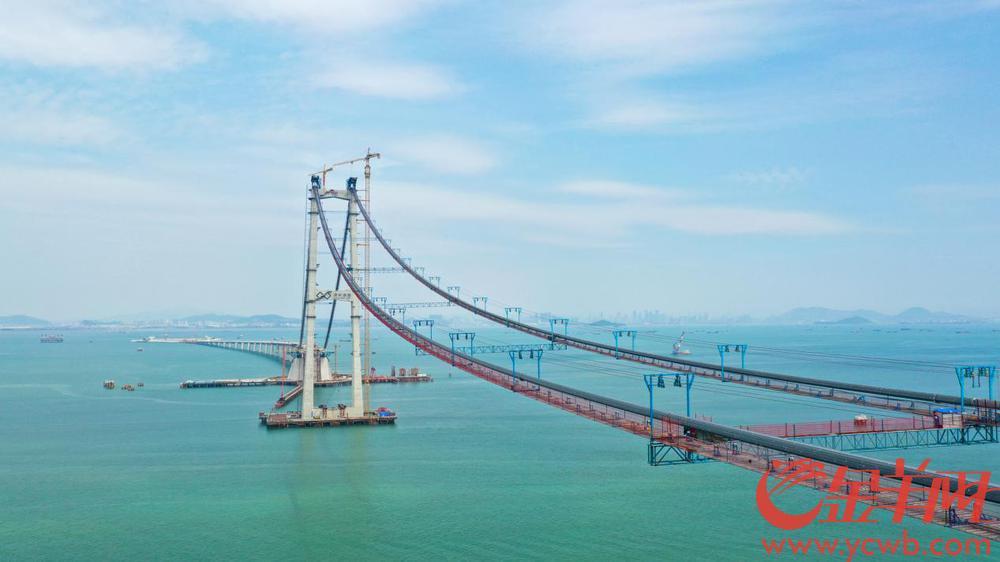
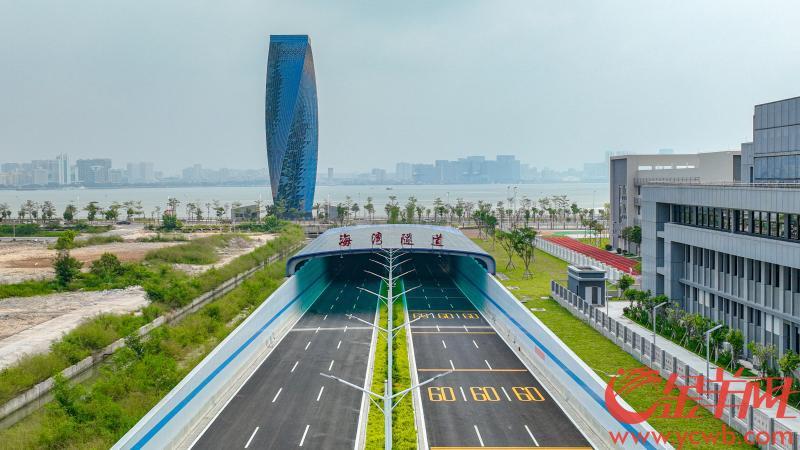
In terms of major infrastructure development, landmark projects such as the Hong Kong-Zhuhai-Macao Bridge and the Guangzhou-Shenzhen-Hong Kong Express Rail Link have been completed and are now in operation. The railway network in the Greater Bay Area has nearly 2,500 kilometers of operational mileage, accelerating the formation of a “Greater Bay Area on rails.” Cross-river passages along both sides of the Pearl River Estuary have been successively completed. Currently, four highway cross-river passages and one railway passage have been built, running from north to south as follows: Huangpu Bridge, Nansha Bridge, Guangzhou-Shenzhen-Hong Kong Express Rail Link, Humen Bridge, and Hong Kong-Zhuhai-Macao Bridge. Four more are under construction: the Foshan-Dongguan Intercity Railway, the Shiziyang Passage, the Shenzhen-Jiangmen Railway, and the Shenzhen-Zhongshan Passage. During the 14th Five-Year Plan period, two additional passages are planned: the Lianhuashan Passage and the Zhongnan-Humen Intercity Railway; and in the long term, one more is envisioned—the Lingdingyang Passage. In May of this year, the Lingdingyang Bridge—the key control project of the Shenzhen-Zhongshan Passage—fully entered the main construction phase of its superstructure. Once this mega-scale cross-sea cluster project, integrating “bridge, island, tunnel, and underwater interchange,” is put into operation, the commute time from Shenzhen to Zhongshan will be reduced from the current two hours to just 30 minutes.
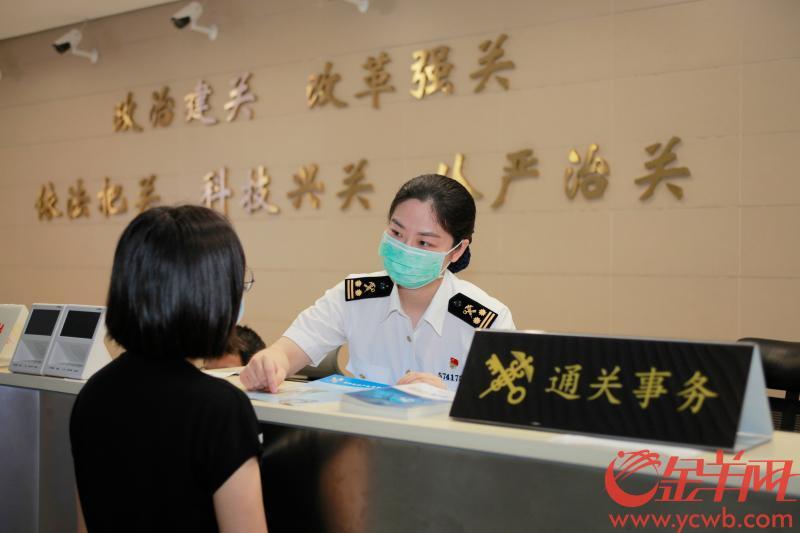
We have strengthened port infrastructure construction, significantly boosting customs clearance efficiency. The Liantang/Xiangyuanwei Port, the New Hengqin Port, and the Qingmao Port have been opened one after another. We have innovatively implemented convenient customs clearance models such as “one-stop clearance” and “cooperative inspection, single release,” enabling two-thirds of inbound and outbound travelers to complete customs procedures via self-service channels, and virtually ensuring that queue times do not exceed 30 minutes.
World-class airport and port clusters are accelerating their development. Construction is being expedited on Phase III of Baiyun Airport, the third runway at Shenzhen Airport, and the expansion of Hong Kong Airport. The Greater Bay Area’s airports now have an annual passenger throughput capacity of 220 million passengers, while its ports boast an annual container handling capacity of approximately 85 million TEUs.
Major cooperation platforms expand development space for Hong Kong and Macao.
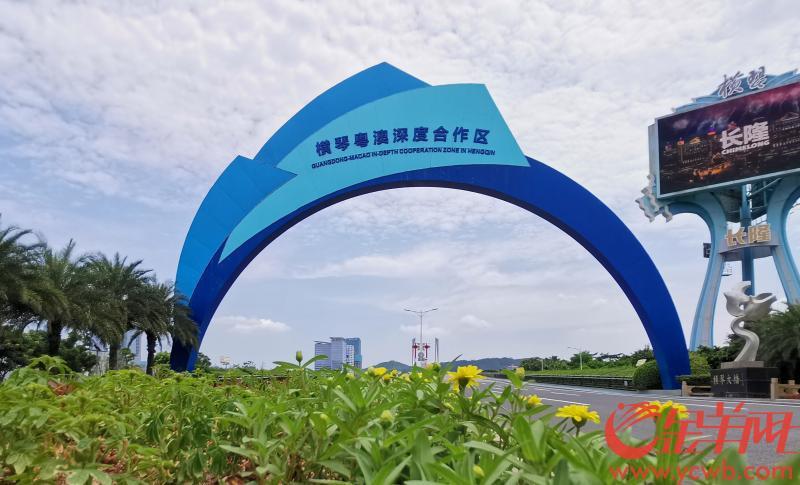
From the "Outline of the Development Plan for the Guangdong-Hong Kong-Macao Greater Bay Area" to the "Overall Plan for the Construction of the Hengqin Guangdong-Macao Deep Cooperation Zone," the "Plan for Comprehensively Deepening Reform and Opening-up in the Qianhai Shenzhen-Hong Kong Modern Service Industry Cooperation Zone," and finally to the "Overall Plan for Deepening Guangzhou Nansha’s Comprehensive Cooperation with Hong Kong and Macao in a Global Context"—one important document after another has been released one after another. Major cooperation platforms such as Hengqin, Qianhai, and Nansha are being accelerated, effectively expanding development space for Hong Kong and Macao.
Building a major cooperation platform for Guangdong, Hong Kong, and Macao, and intensifying efforts to reform and innovate institutional mechanisms, while pioneering and accumulating experience in key areas and critical links, will help “extend from specific points to broader regions” and lead and drive the comprehensive deepening of cooperation among Guangdong, Hong Kong, and Macao. Closely focusing on the main goal of promoting the moderately diversified development of Macao’s economy, the Hengqin Guangdong-Macao Deep Cooperation Zone has innovated a new system of joint consultation, co-construction, co-management, and shared benefits between Guangdong and Macao. The Management Committee, Executive Committee, and provincial-level agencies of the Cooperation Zone have been officially established and are now operational. The implementation plan for the Cooperation Zone’s construction has been issued and put into effect. Supporting policies covering finance and taxation, talent management, entry-exit administration, financial opening-up, and infrastructure such as the “second-line” passage are being steadily advanced. The “New Neighborhood in Macao” project is also progressing smoothly. As of the end of June 2022, the Cooperation Zone was home to over 4,900 enterprises with investment from Macao, with registered capital exceeding 140 billion yuan.
Convenient measures are continuously accelerating the establishment of Australian-funded enterprises in Hengqin. As of the end of August this year, the Hengqin Cooperation Zone has a total of 54,331 registered enterprises, including 5,012 Australian-funded enterprises, accounting for 64.47% of the total number of foreign-invested enterprises. Currently, the Hengqin Cooperation Zone has become the region with the highest concentration of Australian-funded enterprises on the Chinese mainland.
Focusing on cooperation with Hong Kong’s modern service industry, we will seize the two key opportunities—“expanding the zone” and “reform and opening-up”—and promote the coordinated advancement of both the “physical expansion” and “policy expansion” of the Qianhai Shenzhen-Hong Kong Modern Service Industry Cooperation Zone. We will ensure that more than one-third of the land is allocated to Hong Kong enterprises, and accelerate the integration of industrial layout and land-use planning under unified management. The preferential corporate income tax policy for enterprises in the cooperation zone has been extended, and the scope of eligible items has been expanded to five major categories comprising 30 specific items. As of the end of May 2022, Qianhai had registered 9,643 Hong Kong-invested enterprises, including 4,117 Hong Kong enterprises with registered capital exceeding US$10 million.
At the end of June this year, the Qianhai Cooperation Zone unveiled “Nine Practical Measures” to benefit Hong Kong, covering nine key areas including housing, entrepreneurship services, employment, platforms, science and technology innovation, finance, household registration, and people’s livelihoods—providing comprehensive support for Hong Kong residents and businesses seeking to develop in Qianhai. Meanwhile, the Northern Area of the Qianhai Shenzhen-Hong Kong Youth Dream Factory has been completed, expanding youth entrepreneurship space to 139,000 square meters and having cumulatively incubated 335 Hong Kong-based entrepreneurial teams.
Seizing the opportunity, Guangzhou’s Nansha is deepening its comprehensive cooperation with Hong Kong and Macao on a global scale. It has actively sought and successfully obtained approval for several major national-level policy platforms, including the National Demonstration Zone for Promoting Innovation in Import Trade, the Comprehensive Bonded Zone, the Special Zone for International Talent, and the Pilot Program for High-Level Opening-up in Cross-border Trade and Investment. The Southern Marine Science and Engineering Provincial Laboratory has brought together 16 academician teams. Furthermore, an innovative mechanism—the Guangdong-Hong Kong Cooperation Advisory Committee—has been established. Hong Kong University of Science and Technology (Guangzhou) commenced classes this September, marking a new step forward in the comprehensive cooperation among Guangdong, Hong Kong, and Macao.
The core engine functions of Guangzhou and Shenzhen continue to be enhanced.
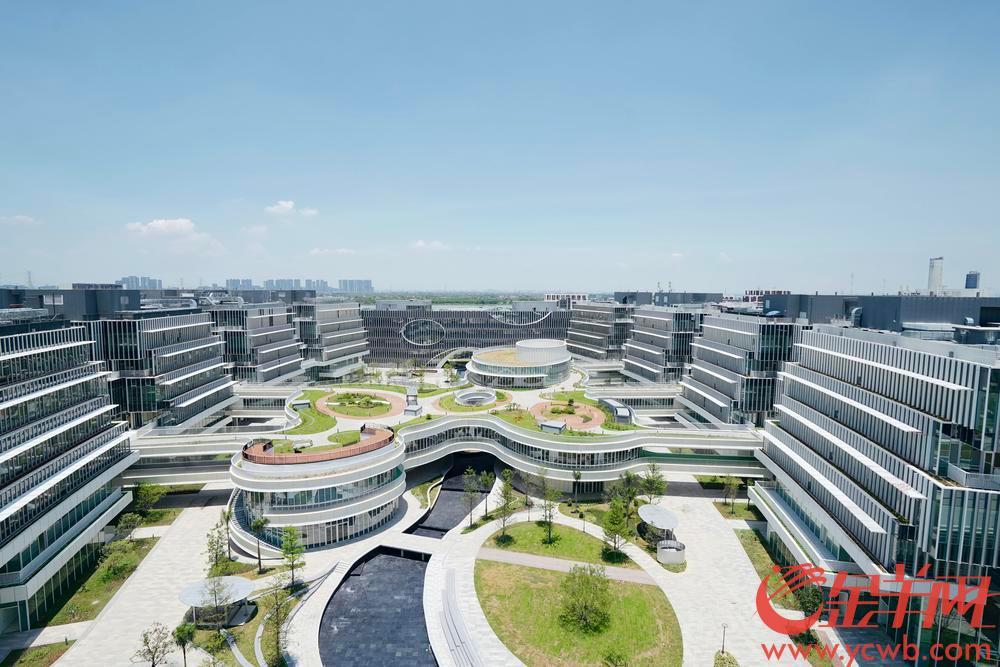
Guangdong is fully supporting Shenzhen’s efforts to build itself into a pilot zone for socialism with Chinese characteristics. Special measures to ease market access, regulations aimed at optimizing the business environment, and the 4.0 version of business environment reform have been introduced and put into effect. The first batch of 40 authorized items under Shenzhen’s comprehensive reform pilot program have been successfully implemented. Breakthroughs have been achieved in key areas such as the merger of the main board and the SME board of the Shenzhen Stock Exchange, as well as the pilot reform of the registration-based system for the ChiNext board. Regionally-focused reforms of state-owned assets and enterprises have been fully launched, and reforms in foreign exchange management—including pilot programs for free trade accounts and facilitation of payments for foreign exchange earnings from capital accounts—are being accelerated. The provincial government has devolved 1,480 economic and social management powers to Shenzhen, encouraging the city to roll out a series of major reform initiatives in areas such as market-oriented allocation of factors, business environment, and urban spatial governance.
Guangdong is providing Guangzhou with the same level of support it offers to Shenzhen, helping Guangzhou accelerate its efforts to inject new vitality into the old city and achieve “four breakthroughs and highlights.” The China-Singapore (Guangzhou) Knowledge City has been elevated to a national-level bilateral cooperation project. The Guangzhou Futures Exchange has been officially launched, and the South China National Botanical Garden has received approval for establishment. The Hong Kong University of Science and Technology (Guangzhou) began classes in September, and major platforms such as the National Pilot Zone for Artificial Intelligence and Digital Economy are being accelerated. The two cities of Guangzhou and Shenzhen are deepening their strategic cooperation across the board, continuously strengthening their role as core engines and effectively leveraging their radiating and driving effects on the development of the “One Core, One Belt, One Zone” initiative.
A gentle breeze blows from the south, caressing the tender new shoots. The construction of the Guangdong-Hong Kong-Macao Greater Bay Area is now at a new historical juncture. Guangdong is vigorously and steadily advancing the smooth implementation and execution of all targets and tasks for the Greater Bay Area, working closely with Hong Kong and Macao to accelerate the development of a world-class bay area and a globally competitive urban cluster.
Editor-in-charge: Liu Zhilu_1214
