
Expansion! China’s largest “intercity” metro network is here!
Release time:2022-09-09


The geographic boundaries of Chinese cities are disappearing.
01
Major Metro Expansion Across Provinces and Cities
The subway is connecting different cities together.
Recently, the "Guangzhou Urban Rail Transit Network Plan (2018–2035)" was released. By 2035, Guangzhou will have established an urban rail transit system comprising high-speed subways, rapid subways, and conventional-speed subways, with a total network length reaching 53 lines and 2,029 kilometers.
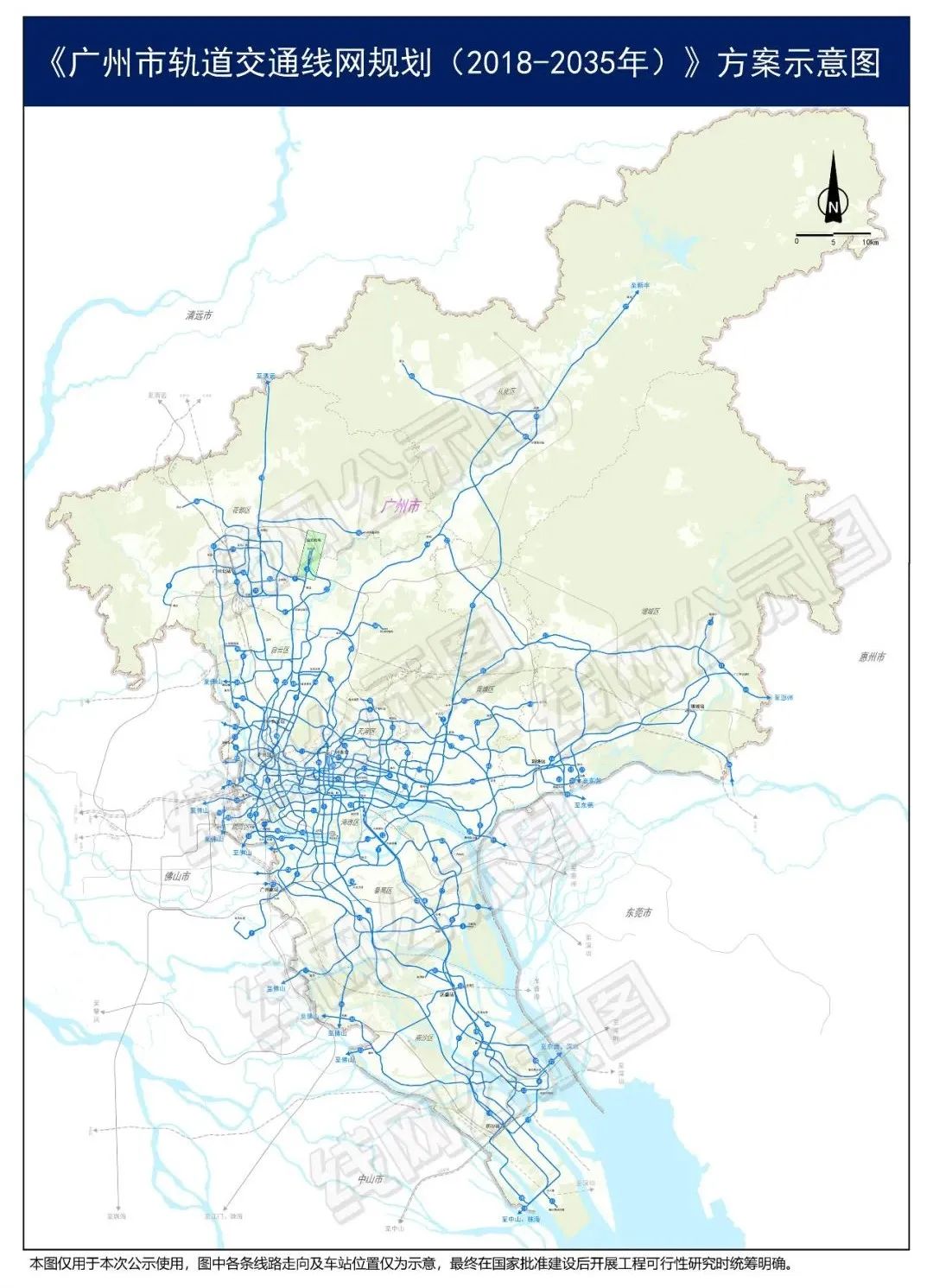
Guangzhou’s metro network is not limited to the city itself; rather, it’s expanding both within and beyond the metropolitan area.
According to the plan, there will be 18 connectivity corridors linking Guangzhou and Foshan in the future, 6 corridors linking Guangzhou and Dongguan, and one corridor each connecting Guangzhou to Shenzhen, Qingyuan, Zhongshan, and Huizhou.
This means that Guangzhou and Foshan will be virtually integrated through the metro system, making the Guangzhou-Foshan region China’s largest metropolitan area. Moreover, Guangzhou will also be connected to Dongguan, Shenzhen, Qingyuan, Zhongshan, and Huizhou via urban rail transit networks.
Not surprisingly, Shenzhen is planning to extend its metro lines into Dongguan and Huizhou within the metropolitan area.
Recently, according to reports from Shenzhen media, in the future, Shenzhen will have a total of 17 intercity rail lines connecting it with Dongguan and Huizhou. Of these, 13 will link Shenzhen and Dongguan, while 4 will connect Shenzhen and Huizhou.
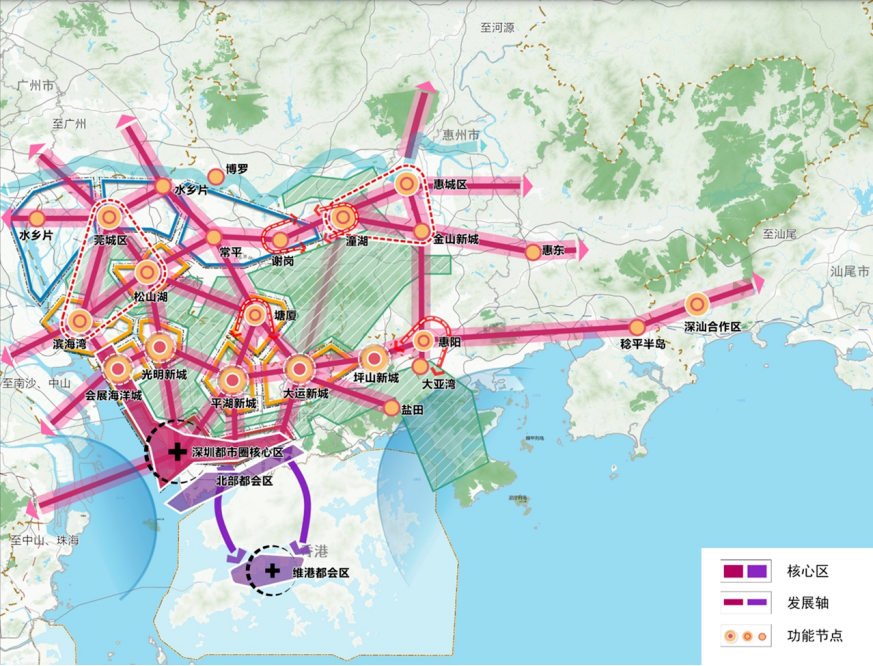
Currently, five lines—Shenzhen Line 6’s eastern extension, Shenzhen Line 11’s northern extension, Shenzhen Line 22’s northern extension, Shenzhen Line 10’s eastern extension, and Shenzhen Line 14’s eastern extension—are under consideration for inclusion in the Fifth Phase Construction Plan.
This marks that the long-awaited interprovincial metro lines connecting Shenzhen with Dongguan and Shenzhen with Huizhou are about to move from concept to reality, and Shenzhen’s population and industries are expected to continue shifting toward these two regions.
By then, in the Greater Bay Area, major cities will not only be connected by high-speed railways, bullet trains, and urban rail transit, but also by a subway network that embodies even greater intra-city integration. As a result, the Greater Bay Area will truly become a single city in terms of transportation.
In addition, inter-provincial subway lines in Shanghai and Beijing are also being steadily advanced.
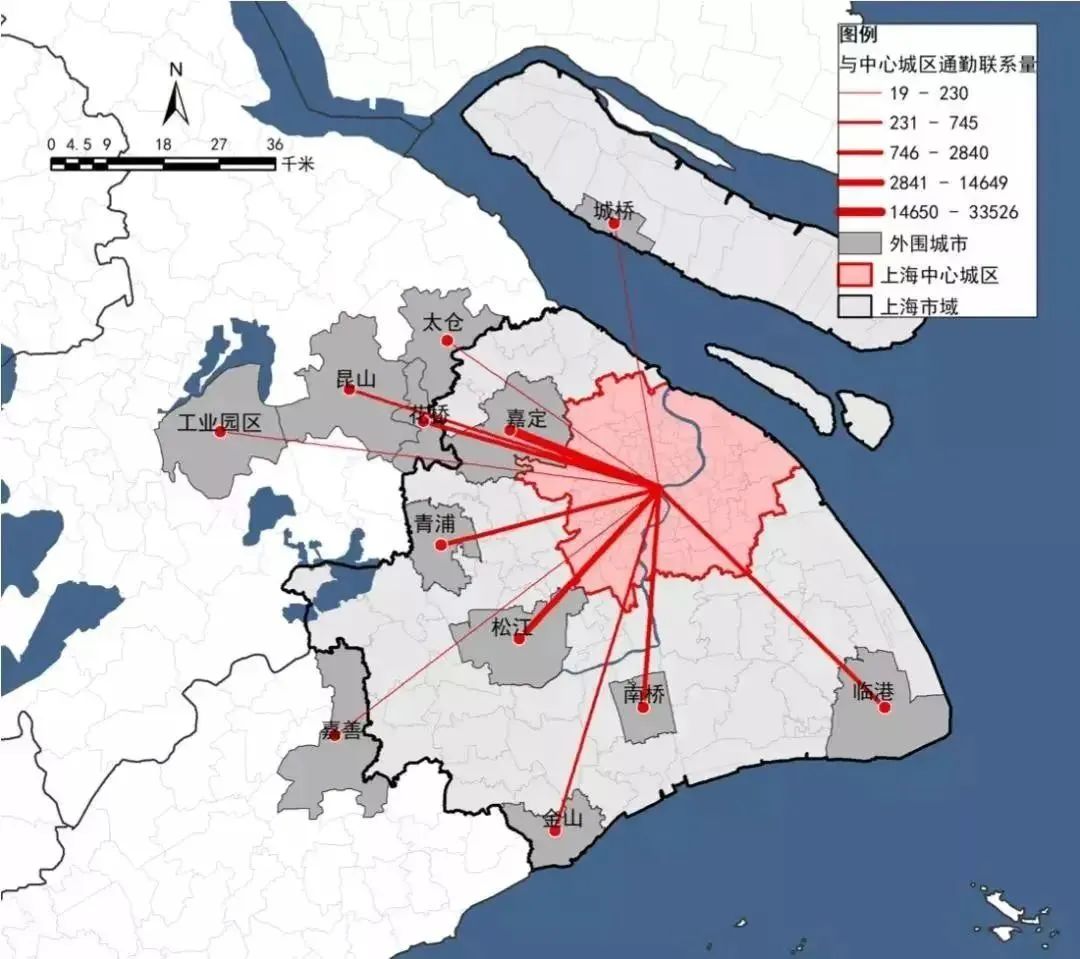
As early as 2013, Shanghai’s Line 11—the country’s first inter-provincial subway line—was fully completed, establishing a direct connection between Shanghai and Kunshan in Jiangsu Province. In the future, rapid suburban rail links may be established between Shanghai and Taicang in Jiangsu Province as well as Jiaxing in Zhejiang Province.
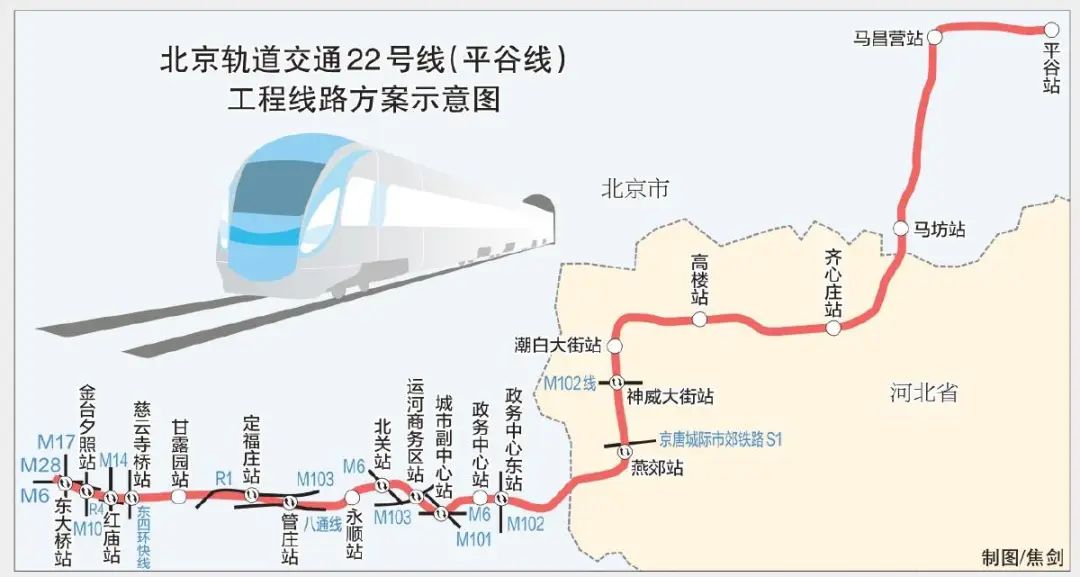
After more than a decade of calls for it, the Beijing subway is finally set to extend into Hebei Province. Currently, the feasibility study report for the Beijing section of Beijing’s Rail Transit Line 22 (Pinggu Line) has been approved, marking the first time that the northern three counties will be connected to the capital’s subway network.
In addition, a number of second-tier cities have begun to plan extensive expansions of their metro networks within metropolitan areas.
At the end of last year, Phase III of Wuhan Metro Line 11, including the Gedian section, began operations, marking Ezhou’s entry into the “metro era” and making it the second city in the province—after Wuhan—to have a metro system.
Currently, the Nanjing S6 Line, the Ningju Intercity Railway, has begun operations. Construction is now fully underway on the Ningma, Ningyang, and Ningchuzhou intercity railways. In the future, Nanjing will be connected by rail transit to Zhenjiang, Yangzhou, as well as Ma'anshan and Chuzhou in Anhui Province.
……
02
Who is the “First City” of the subway?
The subway—why is it so important?
Here is the ranking of urban rail transit lines across China’s cities in the first half of 2022:
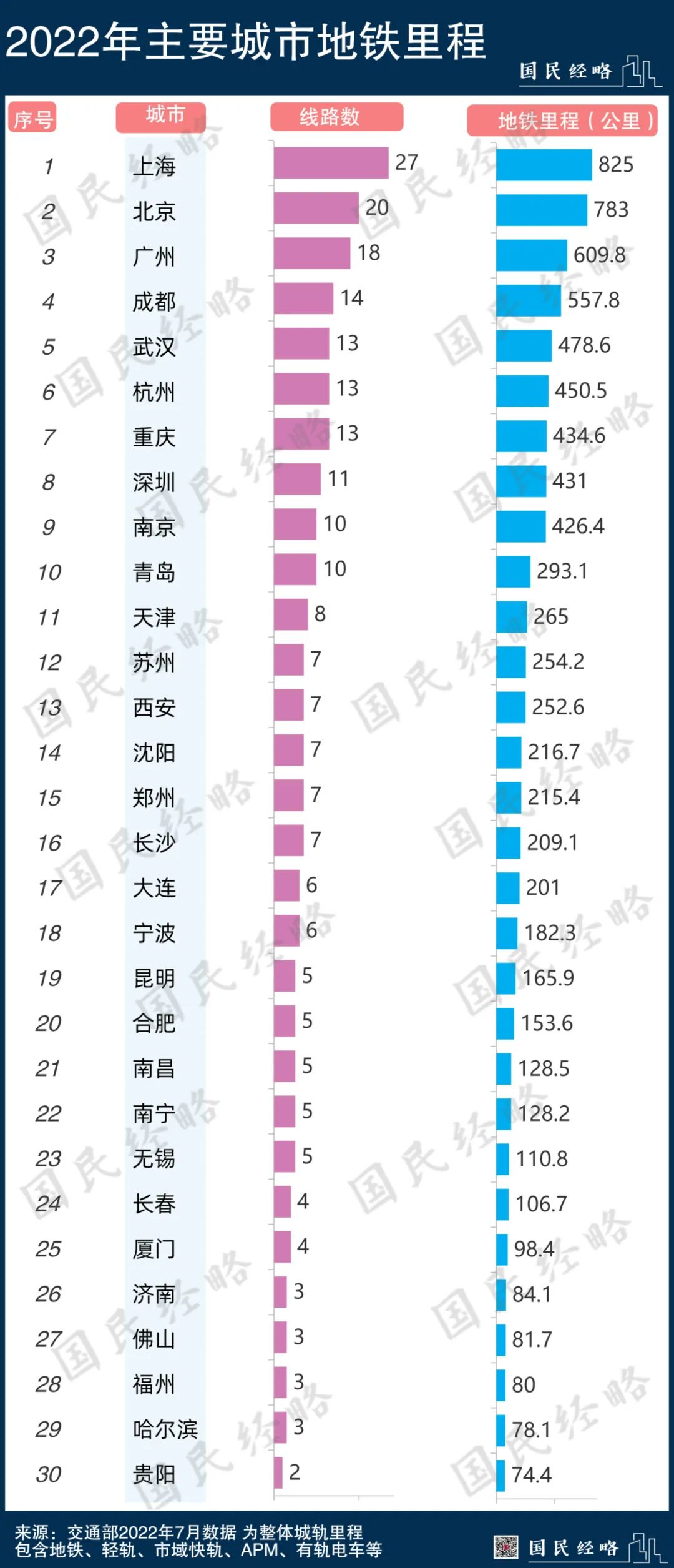
In official documents, the subway is categorized as part of urban rail transit.
Urban rail transit is a broad term that encompasses subways, light rails, metropolitan express railways, trams, maglev systems, APMs, and more.
According to the analysis in the book "China's Urban Megatrends," while high-speed railways focus on inter-provincial transportation and intercity railways focus on transportation between cities, urban rail transit primarily focuses on transportation within cities and between metropolitan areas.
In urban rail transit systems, subways mostly operate underground. They have the highest construction costs, undergo the strictest approval processes, and require the highest construction standards. However, they serve more stations, have the shortest headways, carry larger passenger volumes, generate stronger ripple effects, and thus offer the greatest value.
Urban rapid rail, which provides greater connectivity between the central urban area and suburban districts as well as within metropolitan regions, can be seen as a long-distance subway system—but with fewer stations and longer intervals between them.
Trams, which run on roads and have dedicated right-of-way, require relatively lenient approval procedures, making them an ideal alternative for new urban districts and second- and third-tier cities that cannot afford to build subways.
In China, urban rail transit systems are predominantly subway-based. However, in Nanjing, more than half of the system consists of metropolitan express railways, and in Qingdao, nearly 60% is made up of such systems.
03
The subway—why is it so important?
As soon as the subway starts, gold is worth ten thousand taels.
The subway is renowned for its high passenger volume, numerous stations, frequent service, and punctuality. It not only shortens travel time but also narrows the psychological distance between different regions.
As long as there’s a subway connection, even places dozens of kilometers away from the main urban area will no longer be isolated suburban districts. Similarly, provincial border regions—such as the three counties to the north—will no longer be awkwardly marginalized and “shunned.”
Even if these places cannot be merged with strong central cities, they can still achieve integration in the sense of a metropolitan area through subway systems.
It’s worth noting that the subway has a powerful economic impact.
In the short term, subway construction is a powerful tool for stimulating the economy, and the fixed-asset investment it generates often serves as a key support for maintaining steady growth.
In the medium to long term, once metro lines are interconnected and form a network, it will facilitate the reallocation of urban population, commerce, and resources across different regions, driving a multiple-fold increase in land values around metro stations.
At the metropolitan area level, the existence of intercity subways helps break down geographical boundaries between different cities.
Central cities can use this opportunity to achieve flexible capacity expansion.
Even if it’s not possible to merge neighboring cities through administrative means, their influence in transportation, economy, and industry alone is sufficient to “virtually” bring these surrounding cities under its control.
More importantly, the soft expansion of central cities will also help relieve population and industrial pressures on core cities, thereby fostering the joint development of metropolitan areas.
Currently, commuting across cities has become a trend in the Pearl River Delta, the Yangtze River Delta, and the capital’s metropolitan area.
Data shows that, on average, at least 1.21 million people in the Pearl River Delta commute across cities every day. Among them, thanks to the opening of three intercity metro lines, the average number of trips between Guangzhou and Foshan has reached 1.74 million, placing it among the highest in the country.
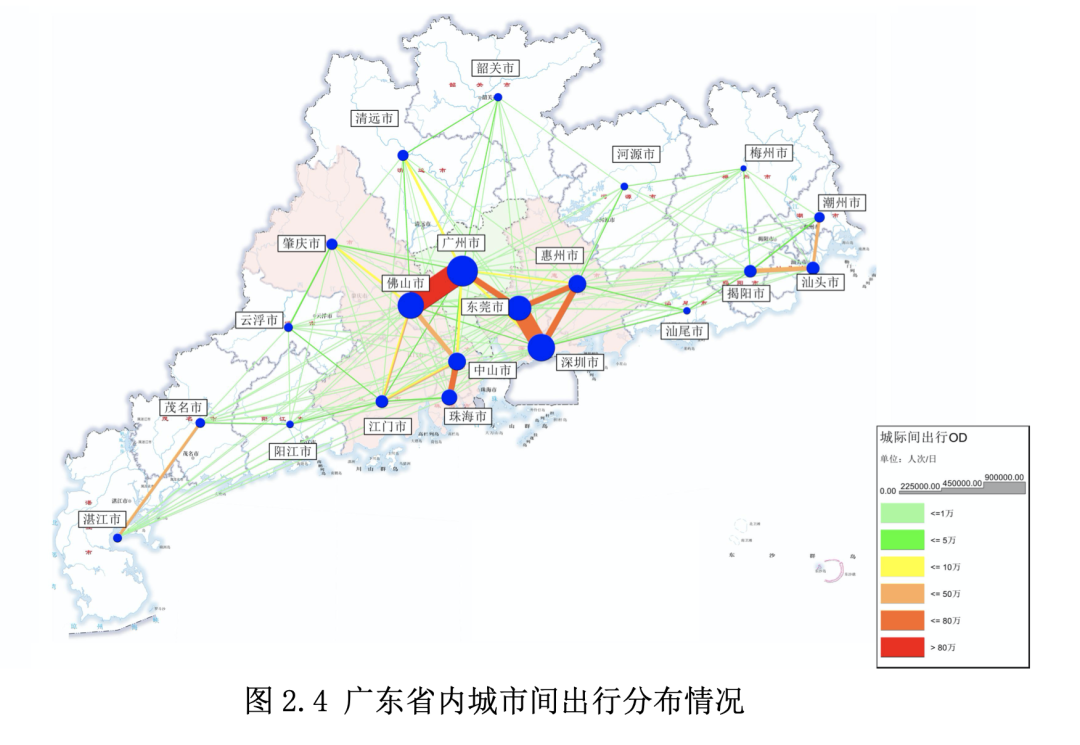
As the intercity metro network gradually takes shape, this figure is set to double—and for the housing markets in third- and fourth-tier cities, which are eagerly awaiting growth, this represents a powerful boost.
04
Not all cities are eligible to build subways.
The expansion of intercity metro networks has enabled third- and fourth-tier cities to leverage metropolitan areas and achieve metro development through an indirect, “indirect” approach.
You should know that not every city is qualified to build a subway.
According to the “Opinions on Further Strengthening the Planning, Construction, and Management of Urban Rail Transit,” released in 2018, the threshold for subway and light-rail construction has been comprehensively raised.
The subway project requires a GDP of over 300 billion yuan, a metropolitan population of over 3 million, and local general budget revenue of over 30 billion yuan.
The light rail system requires a GDP of over 150 billion, a metropolitan population of over 1.5 million, and local general budget revenue of over 15 billion.
In recent years, metro projects in cities such as Baotou were halted because their GDP and fiscal revenues failed to meet the required standards. Huizhou has long sought to connect its metro system with Shenzhen’s, but in the past, its plans were repeatedly put on hold due to limitations imposed by the size of its urban population.
Recently, out of consideration for preventing local government debt, the state has further tightened the threshold for subway construction.
At the end of last year, the National Development and Reform Commission and other departments issued a document stating that it is strictly prohibited to illegally and covertly construct subways or light rail systems under the guise of building new intercity railways or metropolitan (suburban) railways.
Earlier this year, according to a report by the China Business News, relevant authorities will further refine the approval criteria for urban rail transit projects. They will no longer accept first-phase construction plans from cities that do not meet the required conditions, as well as from ordinary prefecture-level cities. Additionally, it was stipulated that if passenger volumes fail to meet the standards three years after a line is put into operation, the city will not be allowed to submit a new round of construction plans.
This means that even if hard indicators such as GDP, population, and fiscal revenue meet the standards, a subway system cannot be built if passenger traffic falls short of the required level.
This underscores the importance of “intercity subways” within metropolitan areas—effectively opening a backdoor for third- and fourth-tier cities with smaller economic scales.
The most prominent feature of metropolitan areas is the “one-hour transportation circle,” which naturally hinges on the seamless connectivity of subways, light rails, metropolitan express railways, and intercity railways.
Under the general trend of transportation integration, even third- and fourth-tier cities located within metropolitan areas, though they may not meet the requirements, can still expect to have their subway systems connected.
This is precisely where the third- and fourth-tier cities have a significant opportunity in the era of metropolitan circles.
More blogs

Room 1010, South Tower, Xinda City Plaza, No. 27, Second Horizontal Road, Shuiyin Road, Yuexiu District, Guangzhou, China