
When was the concept of ecological civilization proposed?
Release time:2022-07-05


In its report to the 17th National Congress of the Communist Party of China in 2007, China proposed: “We must build an ecological civilization and transform our consumption patterns.” The phrase “Jing Tian Wei Di” refers to the transformation of nature and pertains to material civilization; “Zhao Lin Si Fang” means dispelling ignorance and pertains to spiritual civilization. In Western linguistic systems, the term “civilization” originates from the ancient Greek term for “city-state.”
In 1978, the concept of environmental protection was first incorporated into the constitutional framework, stipulating that “the state shall protect the environment and natural resources and prevent and control pollution and other public nuisances.” In 2012, the term “Beautiful China” was included in the report to the 18th National Congress of the Communist Party of China, integrating ecological civilization construction into the overall “Five-in-One” strategic layout. In 2017, the report to the 19th National Congress of the CPC designated “ecological civilization” as an important component of the new journey toward socialist modernization. Only by clearly defining the ideological underpinnings and principled boundaries of ecological civilization can we provide a solid foundation for our country’s basic laws and administrative regulations. In recent years, guided by the principle of ecological civilization, several specialized laws and regulations have been successively revised. Through vigorously promoting ecological civilization construction, the whole Party and the entire nation have significantly enhanced their consciousness and initiative in implementing the concept of green development, and the institutional framework for ecological civilization has accelerated its formation. “Only by adopting the strictest systems and the most rigorous rule of law can we provide a reliable guarantee for the construction of ecological civilization.”
Promote China's ecological civilization construction to a new level.
Xi Jinping
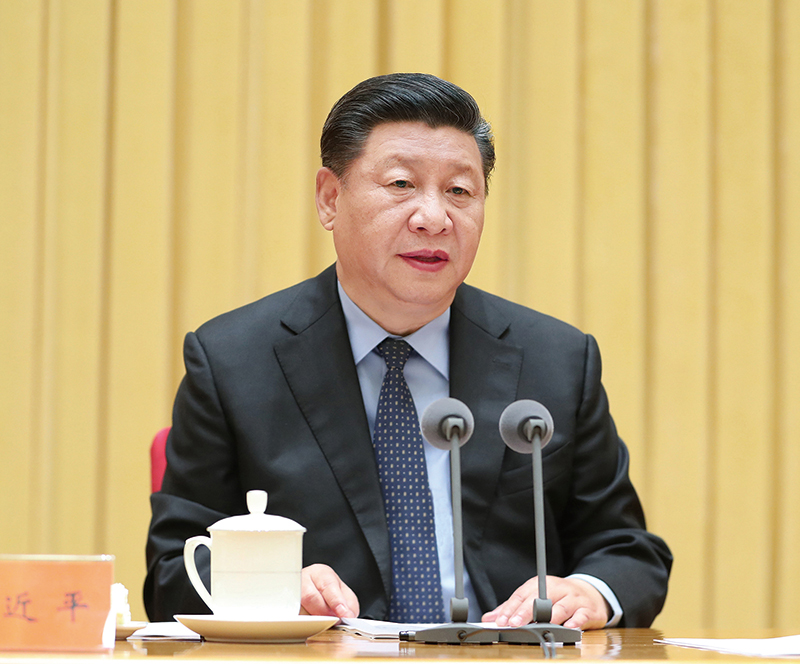
From May 18 to 19, 2018, the National Conference on Ecological and Environmental Protection was held in Beijing. Xi Jinping, General Secretary of the CPC Central Committee, President of the country, and Chairman of the Central Military Commission, attended the conference and delivered an important speech. Photo by Xinhua News Agency reporter Wang Ye.
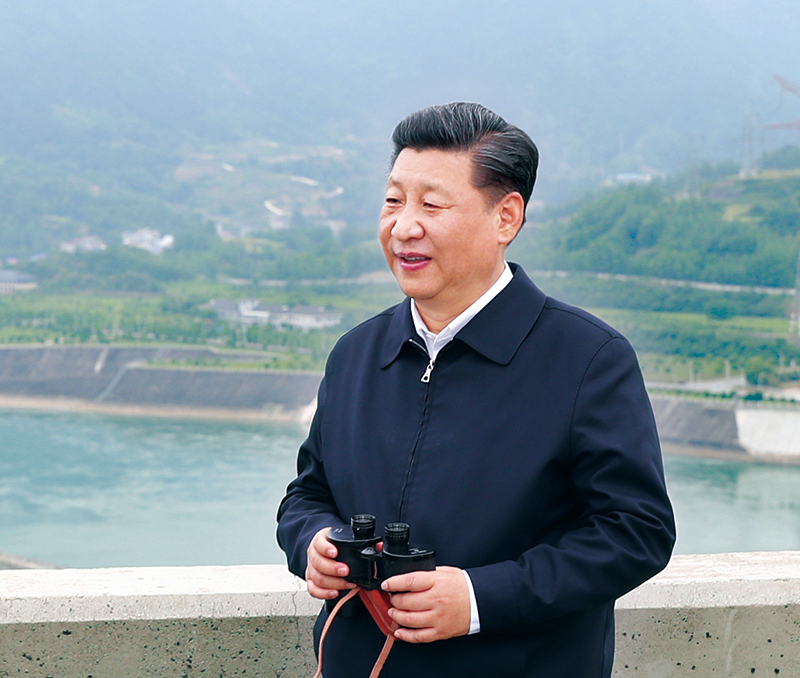
On the afternoon of April 26, 2018, Xi Jinping, General Secretary of the CPC Central Committee, President of the People’s Republic of China, and Chairman of the Central Military Commission, presided over a symposium in Wuhan to deepen the promotion of the development of the Yangtze River Economic Belt and delivered an important speech. Prior to the symposium, on the afternoon of the 24th, Xi Jinping visited the crest of the Three Gorges Dam to inspect the Three Gorges Project and the ecological environment surrounding the dam area. Photo by Xie Huanchi, Xinhua News Agency.
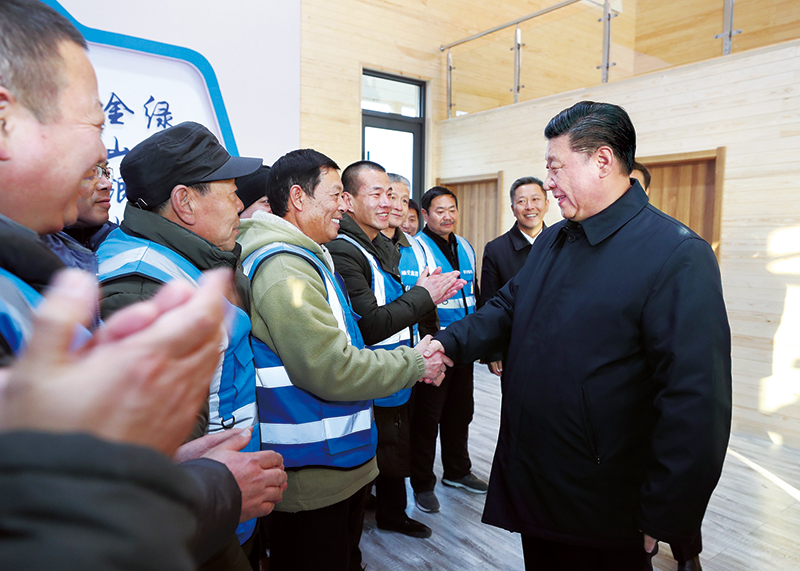
From January 16 to 18, 2019, Xi Jinping, General Secretary of the CPC Central Committee, President of the People’s Republic of China, and Chairman of the Central Military Commission, conducted an inspection tour of the Beijing-Tianjin-Hebei region. He also presided over a symposium on the coordinated development of the Beijing-Tianjin-Hebei region and delivered an important speech. In the afternoon of January 16, Xi Jinping warmly shook hands with villagers who were participating in afforestation and forest protection at the Xiulin Station in Area 1 of the Daqing River Forest Zone within the Xiongan New Area in Hebei Province—a project known as the “Millennial Beautiful Forest.” Photo by Ju Peng, Xinhua News Agency.
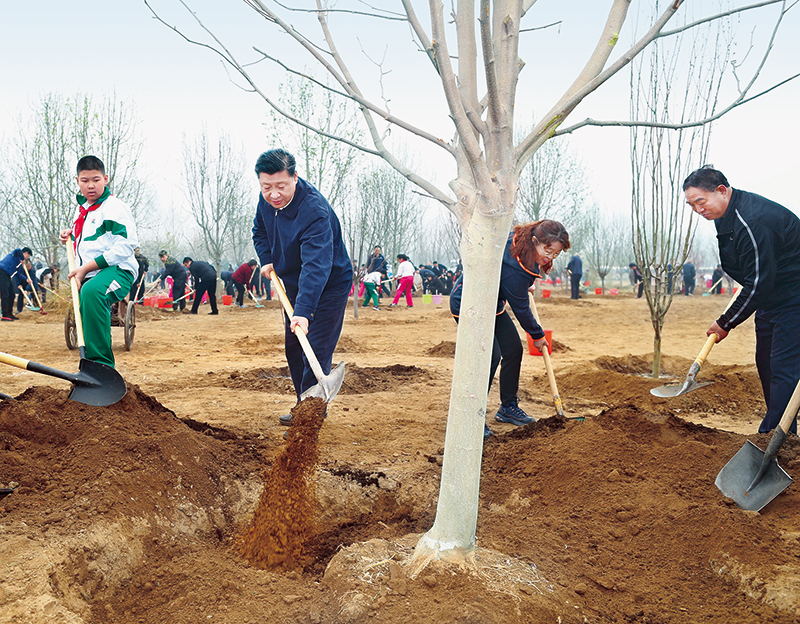
On April 2, 2018, Xi Jinping, Li Keqiang, Li Zhanshu, Wang Yang, Wang Huning, Zhao Leji, Han Zheng, and Wang Qishan—leaders of the Party and the state—visited Zhangjiawan Town in Tongzhou District, Beijing, to participate in a voluntary tree-planting activity for the capital. Here, Xi Jinping is planting trees together with everyone else. Photo by Xie Huanchi, Xinhua News Agency.
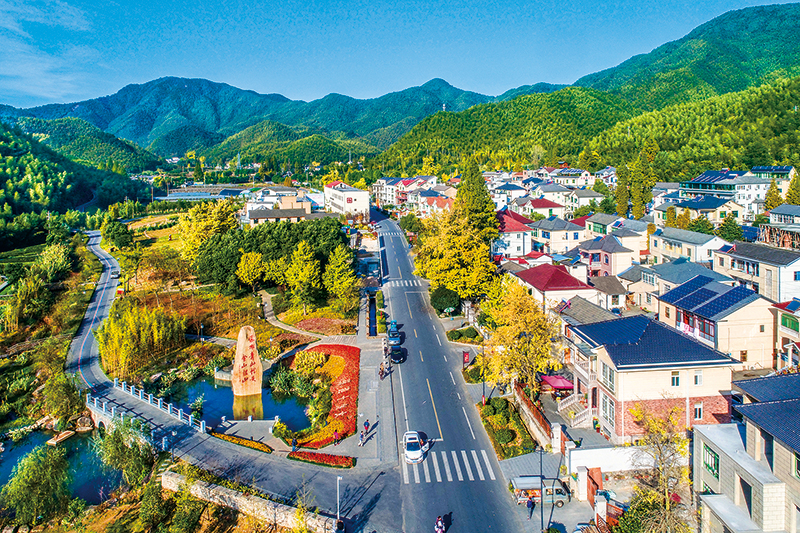
“Lucid waters and lush mountains are invaluable assets!” On August 15, 2005, Comrade Xi Jinping, then Secretary of the Zhejiang Provincial Committee of the CPC, first proposed this development philosophy—closely linked to the rise and fall of civilizations and the well-being of the people—in Anji County, Zhejiang Province. Since then, green has become the dominant hue in the development blueprint of this ancient Jiangnan city. The photo shows Yucun Village in Anji County, Zhejiang Province. Photo provided by the Publicity Department of the Huzhou Municipal Committee of Zhejiang Province; photographed by Shi Hongyan.
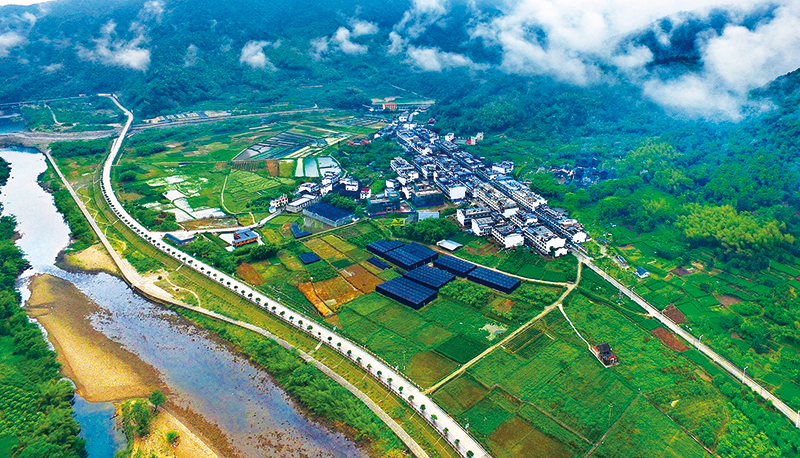
Chixi Village, located in Panxi Town, Fuding City, Fujian Province—known as “China’s First Poverty-Alleviation Village”—has put the philosophy “Lucid waters and lush mountains are invaluable assets” into practice and demonstrated its validity through concrete actions. The photo shows Chixi Village nestled amid greenery. Xinhua News Agency reporter Zhang Guojun/Photo

In August 2017, Xi Jinping, General Secretary of the CPC Central Committee, President of the People’s Republic of China, and Chairman of the Central Military Commission, issued important instructions on the touching deeds of the builders of the Saihanba Forest Farm in Hebei Province. The builders of the Saihanba Forest Farm in Hebei have demonstrated through their practical actions the philosophy that “lucid waters and lush mountains are invaluable assets,” thus forging the Saihanba spirit—a spirit characterized by unwavering commitment to their mission, pioneering spirit amid arduous conditions, and a commitment to green development. The photo, taken on September 29, 2018, shows the autumn scenery of the Saihanba National Forest Park. Photo by Pan Zhengguang, Xinhua News Agency.
I. Deeply recognize the significant importance of strengthening ecological civilization construction.
The construction of an ecological civilization is a fundamental strategy that is vital to the sustainable development of the Chinese nation. Throughout its history, the Chinese nation has always respected and cherished nature; over the course of more than 5,000 years, Chinese civilization has nurtured a rich ecological culture. As the "I Ching" puts it: "Observe the patterns of heaven to discern changes in time; observe the patterns of humanity to transform the world," and "Comply with the way of heaven and earth, and assist in harmonizing their natural rhythms." Laozi said: "Humans follow the earth, the earth follows the heavens, the heavens follow the Dao, and the Dao follows nature." Mencius stated: "If we do not violate the proper farming seasons, grain will be inexhaustible; if we use fishing nets of appropriate mesh size and avoid deep ponds, fish and turtles will never be depleted; if we harvest timber from mountains and forests at the right time, wood resources will last forever." Xunzi remarked: "During the flourishing and abundant growth of plants and trees, we must refrain from entering the mountains and forests with axes and saws, thus sparing their lives and allowing them to grow without interruption." The "Qi Min Yao Shu" records: "By following the rhythms of heaven and assessing the advantages of the land, we can achieve great results with little effort." All these ideas emphasize the need to integrate heaven, earth, and humanity, to link the natural ecosystem with human civilization, and to act in accordance with the laws of nature—harvesting only when the time is right and using resources with moderation. They reflect our ancestors' profound insight into how to properly manage the relationship between humans and nature.
Meanwhile, as early as ancient times, China elevated its understanding of natural ecology to the level of a national governance system. Specifically, it established institutions dedicated to managing mountains, forests, rivers, and marshes, and formulated policies and decrees—this was known as the Yu Heng System. According to the "Rites of Zhou," the "Shan Yu was responsible for overseeing the administration of mountains and forests, setting forth regulations and enforcing prohibitions on their resources," while the "Lin Heng was tasked with patrolling and enforcing forest and hillside restrictions, ensuring compliance." During the Qin and Han dynasties, the Yu Heng System was further divided into various specialized agencies, including the Lin Guan, Hu Guan, Pi Guan, Yuan Guan, and Chou Guan. The Yu Heng System continued in use until the Qing Dynasty. Throughout many Chinese dynasties, there were laws and regulations aimed at protecting nature, with severe punishments meted out to those who violated them. For instance, King Wen of Zhou issued the "Order to Subdue Chong," which stipulated: "Do not damage houses, do not fill in wells, do not cut down trees, and do not disturb livestock. Anyone who fails to comply with these orders shall be put to death without mercy."
When the ecology prospers, civilization prospers; when the ecology declines, civilization declines. The ecological environment is the foundation for human survival and development, and changes in the ecological environment directly affect the rise and fall of civilizations. The four ancient civilizations—the ancient Egyptians, the ancient Babylonians, the ancient Indians, and ancient China—all originated in regions characterized by lush forests, abundant water resources, and fertile fields. The mighty Yangtze and Yellow Rivers, flowing ceaselessly, have been the cradle of the Chinese nation, nurturing the splendid Chinese civilization. However, the deterioration of the ecological environment—especially severe land desertification—led to the decline of the ancient Egyptians and the ancient Babylonians. Some regions in ancient China also experienced painful lessons. The once-glorious Loulan civilization has been buried beneath vast expanses of shifting sands; once upon a time, that area was a land rich in water and grass. The Hexi Corridor and the Loess Plateau were once abundant in water and vegetation. Yet due to deforestation for farming and indiscriminate logging, the ecological environment was severely damaged, accelerating economic decline. Since the mid-Tang Dynasty, China’s economic center gradually shifted eastward and southward, a shift largely linked to the changing ecological conditions in the western regions.
On May 4, 2018, we held a conference to commemorate the 200th anniversary of Karl Marx’s birth. At the conference, I particularly emphasized that in studying Marx, we must not only learn but also put into practice his ideas on the relationship between humanity and nature. Marx and Engels argued that “human beings live by means of nature,” and that humanity produces, lives, and develops through its interactions with nature. If humans treat nature with care, nature will reciprocate by generously bestowing upon them; yet, as Engels pointed out in “Dialectics of Nature,” “if it is true that human beings have conquered natural forces through science and creative genius, then those same natural forces will also exact revenge on humanity.” In “Dialectics of Nature,” Engels wrote: The inhabitants of Mesopotamia, Greece, Asia Minor, and other regions, in their quest for arable land, destroyed forests—but they could never have imagined that today these very places would have become barren wastelands precisely because they had stripped them of their forests, thereby depriving them of the very centers and reservoirs where moisture was accumulated and stored. Similarly, when the Italians in the Alps cleared away the spruce forests on the southern slopes of the mountains—forests that had been carefully preserved on the northern slopes—they never anticipated that, by doing so, they would undermine the very foundations of their alpine pastoral economy. Even less did they foresee that their actions would cause mountain springs to dry up for most of the year, while at the same time unleashing even more ferocious floods onto the plains during the rainy season.
Drawing on history allows us to understand the rise and fall of civilizations. The reason I repeatedly emphasize the need to attach great importance to and properly address the issue of ecological civilization construction is that China’s environmental carrying capacity is limited, its ecosystems are fragile, and the situation—marked by severe pollution, substantial losses, and high risks—has yet to be fundamentally reversed. Moreover, our unique geographic environment has exacerbated imbalances among different regions. In the southeastern part of the “Hu Huanyong Line,” which covers 43% of the country’s land area, live roughly 94% of the nation’s population. This region is dominated by plains, dense river networks, low mountains and hills, and karst landscapes, placing tremendous pressure on its ecological environment. By contrast, the northwestern part of the line, accounting for 57% of the country’s land area, supports only about 6% of the national population. This region is characterized by grasslands, Gobi deserts, oases, and snow-covered plateaus, and its ecosystems are extremely fragile. When we talk about China’s basic national conditions, this is indeed a crucial aspect.
Since the 18th National Congress of the Party, we have regarded ecological civilization construction as an important component of the coordinated advancement of the “Five-in-One” overall layout and the coordinated implementation of the “Four Comprehensive” strategic layout. We have carried out a series of fundamental, pioneering, and long-term initiatives, put forward a host of new concepts, new ideas, and new strategies, and seen the concept of ecological civilization increasingly take root in people’s hearts. The intensity of pollution control, the frequency of institutional reforms, the rigor of regulatory enforcement, and the speed of improvement in environmental quality have all reached unprecedented levels, driving historic, transformative, and systemic changes in ecological and environmental protection.
I have always attached great importance to ecological and environmental work. During my tenure in Zhengding, Xiamen, Ningde, Fujian, Zhejiang, Shanghai, and other regions, I treated this work as a top priority. Since the 18th National Congress of the Communist Party of China, I have issued instructions and directives on serious incidents that severely damage the ecological environment, as well as on the Yangtze River Economic Belt’s principle of “jointly promoting large-scale protection rather than large-scale development.” I have called for strict investigation and punishment, persistent follow-through, and unwavering commitment until the problems are thoroughly resolved—never letting up until the goal is fully achieved—thus ensuring that our green mountains and clear waters remain forever and that all natural ecosystems stay safe and stable.
Since the 18th National Congress of the Communist Party of China, we have deepened reform in a comprehensive manner, accelerated the advancement of top-level design and institutional development for ecological civilization, and successively issued documents such as the "Opinions on Accelerating the Promotion of Ecological Civilization Construction" and the "Overall Plan for Reform of the Ecological Civilization System." We have formulated more than 40 reform plans related to ecological civilization construction, providing comprehensive and systematic arrangements for ecological civilization development from aspects including overall objectives, basic principles, key tasks, and institutional safeguards. Systems such as the evaluation and assessment of ecological civilization construction goals, off-duty audits of natural resource assets, and accountability for ecological and environmental damage have been introduced and implemented. The system of functional zones has been steadily improved. Vertical management of environmental monitoring, supervision, and law enforcement by environmental protection agencies below the provincial level, quality management of ecological and environmental monitoring data, discharge permit systems, the river (lake) chief system, and the ban on importing foreign waste—all environmental governance systems—have been accelerated. Moreover, progress has been smooth in formulating and implementing environmental economic policies such as green finance reforms, preparation of natural resource balance sheets, levying of environmental protection taxes, and ecological conservation compensation mechanisms. Significant phased achievements have been made in air pollution control in the Beijing-Tianjin-Hebei region and in ecological and environmental protection along the Yangtze River Economic Belt. We have also formulated and revised laws including the Environmental Protection Law, the Environmental Protection Tax Law, the Laws on Prevention and Control of Air and Water Pollution, and the Nuclear Safety Law. The Standing Committee of the National People's Congress, the Supreme People's Court, and the Supreme People's Procuratorate have defined criminal standards for environmental pollution and ecological damage, intensified punishment efforts, and established a high-pressure enforcement stance.
In particular, the central environmental protection inspection system has been well-established and effectively implemented. It dares to take tough measures, isn't afraid of offending anyone, and relentlessly focuses on addressing problems. As a result, it has become a powerful and practical approach for urging local Party committees, governments, and their relevant departments to fulfill their responsibilities in ecological and environmental protection.
We have vigorously promoted green development and achieved remarkable results. The spatial layout of our land has been optimized, and ecological protection redlines have been delineated in 15 provinces, autonomous regions, and municipalities—including Beijing-Tianjin-Hebei, the Yangtze River Economic Belt’s provinces, regions, and cities, as well as Ningxia. Supply-side structural reform has been deepened, continuously optimizing industrial structures; a large number of highly polluting enterprises have been orderly phased out, and efforts to address “scattered, chaotic, and polluting” enterprises in the Beijing-Tianjin-Hebei region and surrounding areas have reached an unprecedented scale. The structure of energy consumption has undergone positive changes, and China has become the world’s largest user of new and renewable energy sources. Comprehensive resource conservation has been effectively promoted, leading to a substantial reduction in resource consumption intensity.
We have been deeply implementing the three major action plans for the prevention and control of air, water, and soil pollution. China is the world’s first developing country to undertake large-scale efforts to tackle PM2.5 pollution, and it has now built the largest wastewater treatment capacity in the world. Compared with 2013, in 2017, the average concentration of inhalable particulate matter (PM10) in 338 cities at or above the prefectural level nationwide fell by 22.7%. In the Beijing-Tianjin-Hebei region, the average PM2.5 concentration dropped by 39.6%, and Beijing’s average PM2.5 concentration fell from 89.5 micrograms per cubic meter to 58 micrograms per cubic meter. The proportion of surface water bodies classified as Class I–III under national monitoring increased to 67.9%, while the proportion of water bodies falling into劣V class decreased to 8.3%. Forest coverage has risen from 16.6% at the beginning of this century to around 22%.
China was the first country to release the “National Plan for Implementing the 2030 Agenda for Sustainable Development,” implemented the “National Plan for Addressing Climate Change (2014–2020),” and deposited its instrument of ratification of the Paris Agreement with the United Nations. China’s phase-out of ozone-depleting substances accounts for more than 50% of the total in developing countries, making it the country that has made the largest contribution to global ozone layer protection. In 2017, together with international organizations such as the United Nations Environment Programme, China initiated and established the International Coalition for Green Development of the Belt and Road.
Thanks to unremitting efforts, the quality of China’s ecological environment has continued to improve. At the same time, we must soberly recognize that China’s ecological civilization development faces numerous challenges, immense pressures, and acute contradictions. There are still many tough hurdles to overcome, many stubborn problems to tackle, and many deep-rooted maladies to cure in advancing ecological civilization. The situation remains extremely grave.
Overall, China’s ecological and environmental quality continues to improve steadily, showing a trend of stable progress with positive momentum. However, these gains are not yet firmly established; any slackening could easily lead to setbacks—much like rowing upstream: if you don’t keep moving forward, you’ll inevitably slip backward. The construction of an ecological civilization is now at a critical juncture marked by mounting pressures and heavy burdens. We have entered a crucial stage where we must deliver more high-quality ecological products to meet the growing public demand for a beautiful and healthy environment. At the same time, we’ve reached a window of opportunity—characterized by both the conditions and the capability—to tackle our most pressing ecological and environmental challenges head-on. China’s economy has shifted from a phase of rapid growth to one of high-quality development, requiring us to surmount both conventional and unconventional hurdles. This is a process akin to the phoenix’s rebirth from the ashes. If we fail to seize the moment now, it will become even harder, more costly, and carry even graver consequences to address these issues in the future. We must grit our teeth, persevere through this uphill climb, and overcome this critical threshold.
Achieving a moderately prosperous society in all respects by 2020 is a solemn commitment our Party has made to the people. We cannot simultaneously announce the completion of a moderately prosperous society while the quality of our ecological environment remains poor. If we do so, the people will not endorse it, and such an approach simply cannot withstand the test of history. No matter how difficult the task may be, we must show no hesitation and dare not retreat. With the determination to cut off one’s own wrist, the courage to fight with our backs against the wall, and the relentless spirit of storming fortresses and capturing strongholds, we must resolutely win the tough battle against pollution. Party committees and governments at all levels must consciously integrate economic and social development with ecological civilization building, uphold Party leadership, government guidance, enterprise as the main body, and public participation, and firmly reject the old path of “pollute first, treat later.” We must also resolutely abandon growth models that harm or even destroy the ecological environment. We must fully leverage the political advantages of Party leadership and our socialist system—its capacity to concentrate strength on accomplishing great things—and make full use of the solid material foundation accumulated over the past 40 years of reform and opening-up to intensify efforts in ecological civilization building and address ecological and environmental issues.
II. Principles That Must Be Upheld in Strengthening Ecological Civilization Construction
The ecological environment is a major political issue that is closely linked to the Party’s mission and purpose, as well as a significant social issue that affects people’s livelihoods. Our Party has always attached great importance to ecological and environmental protection, regarding resource conservation and environmental protection as fundamental state policies and sustainable development as a national strategy. As our economy and society have developed and our practice has deepened, our understanding of the overall strategic framework of socialism with Chinese characteristics has continued to grow. From the original concept of “two civilizations” to the “three-in-one” and “four-in-one” frameworks, and now to today’s “five-in-one” framework, this represents a major theoretical and practical innovation—and has also brought about profound transformations in our development philosophy and development approach.
Now, as China’s principal social contradiction has shifted to one between the people’s ever-growing need for a better life and unbalanced and inadequate development, the people’s aspiration for a beautiful ecological environment has become an important dimension of this contradiction. The broad masses of the people eagerly look forward to accelerating efforts to improve the quality of our ecological environment. The people’s yearning for a better life is the Party’s goal and mission; addressing the issues that concern the people most directly and realistically is precisely the mission of the ruling party. Public sentiment is the greatest form of politics. We must actively respond to what the people think, hope for, and urgently need, vigorously promote ecological civilization, provide more high-quality ecological products, and continuously meet the people’s growing demand for a beautiful ecological environment.
Humanity is a community with a shared future, and protecting the ecological environment is a common challenge and shared responsibility facing the entire globe. If we do well in building an ecological civilization, it will be a plus for socialism with Chinese characteristics; otherwise, it could become an excuse for forces with ulterior motives to attack us. Since humanity entered the era of industrial civilization, traditional industrialization has surged forward, creating enormous material wealth while simultaneously accelerating the exploitation of natural resources, disrupting the Earth’s ecosystem’s original cycles and balance, and straining the relationship between humans and nature. Starting in the 1930s, several Western countries experienced a series of environmental disasters, causing immense losses and shocking the world, prompting profound reflection on the capitalist development model. Over the course of humanity’s more than 200-year modernization journey, fewer than 30 countries—and fewer than 1 billion people—have achieved industrialization. The fact that we, as the world’s largest developing country with a population of over 1.3 billion, are advancing ecological civilization and striving to build a strong, democratic, civilized, harmonious, and beautiful socialist modern power will have global implications.
Since the 18th National Congress of the Party, our Party has profoundly addressed major theoretical and practical questions regarding why we should build an ecological civilization, what kind of ecological civilization we should build, and how we should build it, putting forward a series of new concepts, new ideas, and new strategies. In advancing ecological civilization construction in the new era, we must adhere to the following principles.
First, we must uphold the principle of harmonious coexistence between humanity and nature. Humanity and nature are a community of life. The ecological environment has no substitute; once we take it for granted, we risk losing it irretrievably. “Heaven and earth were born together with me, and all things are one with me.” “Heaven speaks not yet the four seasons move on; earth remains silent yet myriad creatures come to life.” When humanity makes rational use of nature and protects it in a friendly manner, nature often responds generously; but when humanity engages in reckless exploitation and brutal plunder of nature, nature’s punishment will inevitably be merciless. Ultimately, any harm humans inflict upon nature will come back to hurt humanity itself—a law that cannot be resisted. “All things find their harmony and thus thrive, and each finds its sustenance and thus grows.” There are numerous vivid and compelling examples of this principle in action. The Dujiangyan Irrigation System, first constructed during the Warring States period and now over 2,000 years old, is a large-scale ecological water-control project built by harnessing the natural flow patterns of the Min River and taking advantage of the topographical features of the Chengdu Plain, which is characterized by its elevated riverbeds. This project has not only benefited the people of its time but continues to bring blessings to future generations.
Throughout the entire development process, we must adhere to the guiding principles of prioritizing conservation, giving top priority to protection, and relying primarily on natural restoration. We must avoid focusing solely on extraction without investing in care, emphasizing development at the expense of protection, or pursuing utilization without addressing restoration. We should protect the ecological environment as carefully as we protect our own eyes, and treat it with the same reverence we accord to life itself. We should strive to do more good deeds that lay solid foundations and benefit future generations; undertake more practical actions aimed at protecting nature and restoring ecosystems; and carry out more meaningful initiatives that tame mountains and manage waters, bringing natural beauty to full display. In this way, we can ensure that people can still see mountains, enjoy clear waters, and cherish their homesickness; we can preserve the breathtaking beauty of our natural ecosystems forever, and restore tranquility, harmony, and beauty to nature itself.
Second, “Lucid waters and lush mountains are invaluable assets.” This is an important development philosophy and a major principle for advancing modernization. The idea that lucid waters and lush mountains are invaluable assets elucidates the relationship between economic development and ecological conservation, revealing that protecting the ecological environment is itself a form of protecting productivity, and improving the ecological environment is tantamount to enhancing productivity. It points to a new path for achieving synergistic coexistence between development and protection. Lucid waters and lush mountains represent not only natural wealth and ecological wealth, but also social wealth and economic wealth. Protecting the ecological environment means safeguarding natural values and enhancing natural capital; it means preserving the potential and momentum for economic and social development, ensuring that lucid waters and lush mountains continue to deliver both ecological and socio-economic benefits.
At its root, ecological and environmental problems are fundamentally issues of development and lifestyle. To address these problems at their source, we must fully embrace the development philosophy of innovation, coordination, green development, openness, and shared benefits. We need to accelerate the formation of spatial patterns, industrial structures, production methods, and lifestyles that conserve resources and protect the environment—keeping economic activities and human behavior within the limits that natural resources and the ecological environment can sustain, thus allowing nature sufficient time and space to recover and rejuvenate. We must speed up the delineation and strict adherence to three red lines: the ecological protection red line, the environmental quality bottom line, and the resource utilization upper limit. We must absolutely stop—and absolutely never allow again—the practice of crossing these three red lines, persisting with an extensive growth model, and depleting the resources inherited from our ancestors to the detriment of future generations. Regarding the ecological protection red line, we must establish a stringent management and control system, ensuring that each red line effectively governs critical ecological spaces and safeguarding that ecological functions remain intact, areas do not shrink, and the nature of these areas does not change. As for the environmental quality bottom line, we must set as a non-negotiable principle that ecological and environmental quality can only improve, never deteriorate, and continuously strive to enhance it further. Regions where ecological damage is severe and environmental quality has significantly degraded must be held strictly accountable. Concerning the resource utilization upper limit, we must take into account not only the needs of humanity and the present generation but also those of nature and future generations. We must strike the right balance in the exploitation and utilization of natural resources, ensuring that we never exceed the carrying capacity of these resources.
Third, a sound ecological environment is the most universally beneficial aspect of people’s well-being. What the people love, we shall cherish; what they detest, we shall abhor. The environment itself is part of people’s livelihood; green mountains are beauty, and blue skies are happiness. Economic development is for the sake of people’s livelihood, and protecting the ecological environment is equally for the sake of people’s livelihood. We must not only create more material and spiritual wealth to meet the people’s growing needs for a better life, but also provide more high-quality ecological products to satisfy their ever-increasing demand for a beautiful ecological environment. We must adhere to the principles of benefiting the people through ecology, promoting ecological prosperity for the people, and putting the people first in ecological endeavors. We should focus on addressing prominent environmental issues that harm public health, accelerate improvements in ecological environment quality, deliver more high-quality ecological products, strive to achieve social equity and justice, and continuously meet the people’s growing demands for a beautiful ecological environment.
Ecological civilization is a cause in which the people jointly participate, jointly build, and jointly enjoy. We must transform the endeavor to build a beautiful China into a conscious action undertaken by all members of the population. Everyone is both a protector, a builder, and a beneficiary of the ecological environment—no one can afford to be a mere bystander, an outsider, or a critic. No one can simply talk without acting or remain aloof and detached. We must enhance public awareness of conservation, environmental protection, and ecological sustainability; cultivate ecological ethics and behavioral norms; launch nationwide green initiatives; and mobilize the entire society to take concrete actions to reduce energy and resource consumption and curb pollution emissions, thereby making our contribution to ecological conservation.
Fourth, mountains, rivers, forests, farmland, lakes, and grasslands constitute a community of life. The ecosystem is a unified natural system—a tightly interconnected, organically linked chain in which all elements are mutually dependent. Human survival depends on farmland; the vitality of farmland depends on water; the vitality of water depends on mountains; the vitality of mountains depends on soil; and the vitality of soil depends on forests and grasslands. This community of life is the material foundation for human survival and development. We must take a holistic, long-term, comprehensive, and systemic approach to decision-making. If we prioritize short-term gains at the expense of larger, long-term interests, or if we focus on one aspect while neglecting others, we will inevitably cause systemic and long-term damage to the ecological environment.
We must seek new approaches to governance from a systems engineering and holistic perspective. We can no longer adopt the old-fashioned approach of treating symptoms rather than root causes—tackling headaches when they occur, or foot pain when it arises—while each department handles its own isolated tasks and hinders one another. Instead, we must take a coordinated, integrated, and comprehensive approach, employing multiple measures simultaneously and carrying out ecological civilization building in a全方位, all-region, and full-process manner. For example, to effectively tackle water pollution and protect our water environment, we need to comprehensively coordinate efforts across both banks, upstream and downstream, land and water, surface and groundwater, rivers and oceans, aquatic ecosystems and water resources, as well as pollution control and ecological conservation, thereby achieving the optimal results from systematic governance. We must deeply implement integrated ecological protection and restoration of mountains, rivers, forests, farmland, lakes, and grasslands; launch large-scale national afforestation initiatives; and accelerate comprehensive management of soil erosion, desertification, and rocky desertification. In promoting the development of the Yangtze River Economic Belt, we must prioritize large-scale protection over large-scale development, adhere to ecological priority and green development, and ensure that all economic activities along the Yangtze River are conducted on the premise of not harming the ecological environment.
Fifth, we must protect the ecological environment with the strictest systems and the most rigorous rule of law. Protecting the ecological environment hinges on relying on institutions and the rule of law. Many of the prominent problems in China’s ecological and environmental protection are closely linked to imperfections in the institutional framework, lax enforcement of existing rules, weak legal oversight, inadequate implementation, and insufficient penalties. We must accelerate institutional innovation, increase the supply of institutional frameworks, improve institutional support mechanisms, and strengthen enforcement of these institutions, ensuring that they serve as rigid constraints and inviolable red lines. We must strictly use institutions to regulate power and govern officials, safeguard blue skies and enhance greenery—ensuring that those entrusted with power bear corresponding responsibilities, that those who shoulder responsibilities step up to the plate, and that those who fail in their duties will be held accountable—thus guaranteeing that the Party Central Committee’s decisions and plans for ecological civilization construction are effectively implemented, take root, and yield tangible results.
When those who uphold the law are strong, the country will be strong; when those who uphold the law are weak, the country will be weak. Orders must be firmly believed in, and laws must be strictly enforced. The vitality of a system lies in its implementation—what matters most is genuine enforcement, achieved through rigorous oversight and management. We have already introduced a series of reform measures and related systems, and we must ensure their effective implementation with the same seriousness and determination we bring to the central environmental protection inspections. We must firmly establish the rigidity and authority of our systems; there can be no selective compliance, no loopholes, and no compromises. We must implement the responsibility system for ecological civilization development among leading cadres and enforce strict assessments and accountability. Those who make reckless decisions without regard for the ecological environment and cause grave consequences must be held fully accountable—and their accountability should extend throughout their entire lives. We cannot show any leniency toward acts that damage the ecological environment, nor can we allow such violations to go unpunished. We must make great efforts to identify and highlight egregious examples of ecological destruction, sending a strong signal that such behavior will be severely punished. For any place, at any time, and against anyone—wherever accountability is required, we must pursue it relentlessly. We must never allow the institutional framework to become a “tiger without teeth.”
Sixth, we must jointly promote global ecological civilization. The construction of ecological civilization is vital to the future of humanity, and building a green home is a shared dream of all humankind. Protecting the ecological environment and tackling climate change require all nations to pull together and work in concert—no country can afford to stand aloof or pursue its own interests alone. China has become a major participant, contributor, and leader in global ecological civilization efforts. We advocate accelerating the establishment of an ecological system that respects nature and promotes green development, and jointly building a clean and beautiful world. We must deeply engage in global environmental governance, enhance our voice and influence within the global environmental governance system, actively guide the direction of international order transformation, and develop solutions for global environmental protection and sustainable development. We must uphold environmental friendliness and lead international cooperation in addressing climate change. We should advance the Belt and Road Initiative, ensuring that the principles and practices of ecological civilization benefit the people of all countries along the route.
III. Firmly fight the tough battle against pollution prevention and control.
In the report to the 19th National Congress of the Communist Party of China, I emphasized the need to focus on key areas, address shortcomings, and strengthen weak links—especially by resolutely fighting the tough battles against major risks, targeted poverty alleviation, and pollution prevention and control—so that the building of a moderately prosperous society in all respects will win the people’s approval and stand the test of history. Now, we must concentrate our superior forces and adopt more effective policies and measures to win this tough battle.
First, we must accelerate the development of an ecological civilization system. To effectively address the ecological and environmental challenges arising from this pivotal historical juncture, we must speed up the establishment and improvement of an ecological cultural system guided by ecological values, an ecological economic system centered on industrial ecologization and the industrialization of ecology, a target responsibility system focused on enhancing the quality of the ecological environment, an institutional framework for ecological civilization underpinned by the modernization of governance systems and governance capacity, and an ecological security system emphasizing the healthy cycles of ecosystems and the effective prevention and control of environmental risks.
By accelerating the construction of an ecological civilization system, we will significantly enhance the quality and efficiency of China’s economic development. By 2035, we will have generally established spatial patterns, industrial structures, production methods, and lifestyles that conserve resources and protect the environment. As a result, the quality of the ecological environment will undergo a fundamental improvement, and the modernization of the national governance system and governance capacity in the field of ecological and environmental protection will be largely achieved, bringing us closer to realizing the goal of a Beautiful China. By mid-century, we will have built a strong, democratic, civilized, harmonious, and beautiful socialist modern power, with comprehensive upgrades in material, political, spiritual, social, and ecological civilizations. A fully integrated green development model and lifestyle will be widely adopted, fostering harmonious coexistence between humanity and nature. The modernization of the national governance system and governance capacity in the ecological and environmental protection sector will be fully realized, thus completing the construction of a Beautiful China.
Second, we must comprehensively promote green development. Green represents the symbol of life and the natural backdrop of our planet; more importantly, it forms the foundation of a better life and fulfills the aspirations of the people. Green development is an essential component of the new development philosophy. It complements and interacts with innovative development, coordinated development, open development, and shared development. It represents a comprehensive transformation and is an inevitable requirement for building a high-quality modern economic system. The goal is to shift away from the traditional production and consumption model characterized by "large-scale production, large-scale consumption, and large-scale emissions," ensuring that resources, production, and consumption are aligned and mutually compatible. This will enable us to achieve a harmonious integration of economic and social development with ecological conservation, fostering a harmonious coexistence between humanity and nature.
Accelerating the development of a green growth model is the fundamental solution to addressing pollution. Only by drastically reducing pollutant emissions at the source can we significantly improve the quality of our ecological environment. The key lies in restructuring, optimizing spatial layouts, strengthening industries, and ensuring seamless integration across the entire industrial chain. Adjusting both the economic and energy structures will not only elevate the level of economic development but also reduce the burden of pollution emissions. We must conduct environmental impact assessments for major economic policies and industrial layouts, optimize the spatial planning for land use, and adjust industrial layouts within regional watersheds. We should foster and expand energy-saving and environmental protection industries, clean production industries, and clean energy industries, while developing efficient agriculture, advanced manufacturing, and modern service sectors. Moreover, we must promote comprehensive resource conservation and circular utilization, thereby establishing closed-loop connections between production and living systems.
A green lifestyle encompasses people’s clothing, food, housing, and transportation. We must promote a simple, moderate, green, and low-carbon lifestyle, and oppose extravagance, waste, and irrational consumption. We should widely launch initiatives to build resource-saving government offices, green households, green schools, and green communities; promote green modes of transportation; and, through a green revolution in lifestyles, compel a green transformation of production methods.
Third, we must prioritize addressing prominent ecological and environmental issues as a key area for improving people’s livelihoods. No matter how small a task is that benefits the people, we must see it through; no matter how minor a problem may seem that harms the people, we must tackle it head-on. To win the tough battle against pollution, we need to launch several landmark, high-impact campaigns, pooling our resources and focusing our efforts on tackling the most pressing ecological and environmental problems right at the doorstep of the people. At present, severe air pollution, black-and-stinky water bodies, garbage accumulation in urban areas, and deteriorating rural environments have become sources of deep public concern and serious threats to people’s livelihoods. These issues severely affect people’s daily lives and production, drawing widespread dissatisfaction and complaints from the public—and even becoming significant factors triggering social instability. We must therefore make every effort to address these problems effectively. We must concentrate our best resources, mobilize all sectors of society, pool collective wisdom and strength, and adopt a strategy of mass participation and joint governance. We’ll fight one campaign after another, waging a people’s war against pollution.
Fighting resolutely to win the battle for blue skies is of paramount importance. This is not only an urgent aspiration of our domestic population but also a commitment we’ve made to the international community in ensuring the successful hosting of the Beijing Winter Olympics. We must focus primarily on key regions such as the Beijing-Tianjin-Hebei area and its surrounding regions, the Yangtze River Delta, and the Fenwei Plain, with Beijing serving as a focal point. With significantly improved air quality as a strict requirement, we will strengthen joint prevention and control efforts, essentially eliminate severe pollution episodes, and restore to the people skies filled with blue skies and white clouds, and twinkling stars. We need to adjust our industrial structure by reducing excess and outdated production capacity and fostering new drivers of growth. We must promote compliance with emission standards, cut pollutant emissions from key industries, and carry out ultra-low emission upgrades in critical sectors such as thermal power and steel. We should roll out nationwide the remediation of “scattered, chaotic, and polluting” enterprises—resolutely shutting down and banning some, upgrading and rectifying others, and relocating still others into designated industrial parks. We must adjust our energy mix by reducing the share of coal consumption and accelerating the development of clean energy sources. We must adhere to strategies tailored to local conditions and adopt a multi-pronged approach: using electricity where appropriate, and gas where suitable—and unswervingly push forward with clean heating in northern regions during winter. We should speed up the construction of a comprehensive natural gas production, supply, storage, and sales system; optimize the layout of natural gas sources; enhance interconnectivity of pipeline networks; and ensure a stable supply of gas. We must provide subsidy policies and price support to ensure that after switching from coal to gas or coal to electricity, ordinary households can afford and have access to these cleaner energy options. We need to intensify efforts to phase out small coal-fired boilers, temporarily suspend some highly polluting coal-fired generating units, and accelerate their upgrading and transformation. We must restructure our transportation system by reducing road freight volumes and increasing rail transport. We must urgently address diesel truck pollution, promote the consolidation and upgrading of freight operators, improve their efficiency and quality, and accelerate their scaling up and chain-based operations.
We must deeply implement the Action Plan for Water Pollution Prevention and Control, and wage tough battles to protect water sources, tackle urban black-and-odorous water bodies, carry out comprehensive governance of the Bohai Sea, and safeguard drinking water safety. We aim to basically eliminate urban black-and-odorous water bodies and restore to the people clear waters, green banks, and fish swimming in shallow waters. There are many challenges to address in water management, among which one issue is particularly urgent: we must accelerate efforts to make up for the shortcomings in urban sewage collection and treatment facilities. The backlog in this area is enormous. According to information provided by the Central Environmental Protection Inspection, even some municipalities directly under the central government, highly developed coastal provinces, and special economic zones have large volumes of untreated sewage being discharged directly into water bodies. We need to set ambitious, concrete targets and mobilize all resources to achieve full coverage, complete collection, and comprehensive treatment of urban sewage networks as soon as possible. Otherwise, if we keep treating pollution on one hand while continuing to discharge pollutants on the other, our efforts will be twice as hard for half the result.
We must fully implement the Action Plan for the Prevention and Control of Soil Pollution and promote the formulation and enforcement of a Soil Pollution Prevention and Control Law. We should prioritize key regions, industries, and pollutants, strengthen the control and remediation of soil pollution, effectively mitigate risks, and ensure that the public can eat with confidence and live in peace of mind. We must comprehensively ban the import of foreign waste, significantly reduce both the types and quantities of imported solid wastes, severely crack down on illegal activities that harm the environment through hazardous waste, and resolutely curb the illegal transfer, dumping, utilization, and disposal of hazardous waste.
The rural environment directly affects our food supply—our rice bowls, vegetable baskets, water jars, and urban “back gardens.” We must adjust the structure of agricultural inputs by reducing the use of chemical fertilizers and pesticides, increasing the proportion of organic fertilizers used, and improving the system for recycling and disposing of old plastic mulch film. We need to continuously carry out initiatives to improve rural living environments, achieving full coverage of environmental improvements in all administrative villages nationwide, and essentially resolving issues related to rural waste, sewage, and toilets. Together, we can create beautiful countryside landscapes that preserve the idyllic scenery of birdsong and fragrant flowers for local residents.
Ecological conservation and pollution prevention are inextricably linked and mutually reinforcing. In this context, pollution prevention is like the numerator, while ecological conservation is like the denominator. We must reduce the numerator—by cutting down on pollutant emissions—and increase the denominator—by expanding environmental capacity—through coordinated efforts. We need to strictly enforce the ecological protection redlines, ensuring comprehensive oversight of the entire system encompassing mountains, rivers, forests, farmland, lakes, and grasslands, as well as full-process supervision before, during, and after the event. We should also promote the retention of open spaces and the addition of green areas in urban areas, enabling residents to enjoy pleasant living and leisure spaces.
Fourth, effectively prevent ecological and environmental risks. Ecological and environmental security is an important component of national security and a crucial guarantee for the sustained, healthy development of the economy and society. “Plan ahead before problems arise; anticipate potential risks before they materialize.” We must remain highly vigilant at all times, prevent various ecological and environmental risks from accumulating and spreading, and be fully prepared to address any form of ecological and environmental risk challenges.
Ecological and environmental risks must be incorporated into routine management, and a systematic risk prevention system covering the entire process and multiple levels must be established. We need to rigorously guard against ecological and environmental risks in key areas such as waste incineration and paraxylene (PX), proactively prevent and resolve “NIMBY” (Not In My Backyard) issues, break the deadlock surrounding “NIMBY” problems in environmentally sensitive projects, and focus on enhancing our capacity for emergency response to sudden environmental incidents. We must strengthen nuclear and radiation safety oversight, improve the regulatory framework, refine regulatory mechanisms, and enhance regulatory capabilities to ensure foolproof safety.
Fifth, we must accelerate the implementation and effectiveness of reforms to the ecological civilization system. Reform of the ecological civilization system is a crucial area for comprehensively deepening reform. We should focus on addressing prominent issues in the ecological and environmental field, ensure the effective implementation of already-released reform measures, and promptly develop new reform plans. Key initiatives related to the reform of the ecological civilization system must be put in place and begin to play their role as soon as possible. The central environmental protection inspection mechanism must strengthen its authority, bolster its staffing, and deepen its efforts. We should explore pathways for realizing the value of ecological products that are government-led, involve participation from enterprises and all sectors of society, operate through market mechanisms, and ensure sustainability; carry out pilot programs to accumulate experience. We must also improve systems such as environmental credit evaluation, mandatory information disclosure, and stringent penalties and heavy punishments.
In this deepening reform of Party and state institutions, the Party Central Committee has decided to establish the Ministry of Ecology and Environment. The main considerations behind this decision are twofold: First, to change the fragmented approach to pollution control—where multiple agencies each tackle different aspects of water pollution—and to consolidate their functions, thereby providing robust support for winning the battle against pollution. Second, to strengthen unified oversight over ecological protection and restoration, and firmly safeguard the red lines for ecological conservation. We must connect aboveground and underground systems, land-based and aquatic environments, terrestrial and marine ecosystems, urban and rural areas, as well as carbon monoxide and carbon dioxide emissions. By integrating pollution prevention and ecological protection efforts, we can enhance the unified supervision of ecological and environmental protection. The ecological and environmental authorities must fulfill their responsibilities effectively by unifying policy formulation, planning, and standards; standardizing monitoring and assessment; harmonizing supervision and law enforcement; and ensuring consistent inspection and accountability. We need to integrate and establish a comprehensive law enforcement team for ecological and environmental protection, optimizing functional allocation and implementing unified ecological and environmental protection law enforcement in accordance with the principles of reducing administrative levels, consolidating teams, and improving efficiency. We must also improve the regional, watershed, and marine ecological and environmental management system, pilot cross-regional environmental protection agencies, and integrate the responsibilities for atmospheric environment management previously held by various relevant departments and local governments. Furthermore, we should accelerate the establishment of watershed-level environmental supervision and law enforcement agencies, enhancing the synergy between watershed-level environmental oversight and administrative law enforcement. Finally, we must refine the marine ecological and environmental management system by setting up regulatory agencies tailored to specific marine regions.
Sixth, we must enhance the level of environmental governance. Environmental governance is a systematic undertaking that requires the integrated use of various approaches, including administrative measures, market mechanisms, rule-of-law-based governance, and technological innovation. We should fully leverage market-oriented approaches to accelerate the marketization of ecological and environmental protection, thereby attracting more social capital into this field. We need to refine the pricing mechanisms for resources and the environment, incorporating ecological and environmental costs into the overall cost of economic operations. We should adopt diverse methods to support public-private partnership projects. For ecological and environmental protection, we must spend what needs to be spent and never skimp on necessary investments. We must ensure that financial inputs are aligned with the tasks of tackling pollution prevention and control. We should strengthen scientific and technological research on the root causes and solutions for severe air pollution, as well as on major comprehensive environmental governance projects in the Beijing-Tianjin-Hebei region. Specialized and forward-looking studies should be conducted on the control of ozone, volatile organic compounds, and emerging pollutants. Furthermore, we should carry out policy-oriented research on major ecological and environmental issues that have significant implications for economic and social development, accelerate the transformation and application of research findings, and provide solid support for scientific decision-making, environmental management, precise pollution control, and services that benefit the public. We must implement an active national strategy to address climate change, promote and guide the establishment of a global climate governance system that is fair, equitable, and mutually beneficial, thereby showcasing China’s image as a responsible major country and advancing the building of a community with a shared future for mankind.
IV. Strengthen the Party’s leadership over ecological civilization development.
The battle to fight pollution prevention and control is time-sensitive, fraught with heavy tasks and great difficulty—it’s a major, tough, and arduous campaign that calls for strengthened Party leadership. The CPC Central Committee and the State Council have issued the “Opinions on Comprehensively Strengthening Ecological and Environmental Protection and Resolutely Winning the Battle Against Pollution,” providing comprehensive guidance for winning this crucial battle. All regions and departments must enhance their “four consciousnesses,” firmly uphold the authority and centralized, unified leadership of the CPC Central Committee, earnestly shoulder their political responsibility for ecological civilization development, and fully implement the decisions and deployments of the CPC Central Committee.
The principal leaders of Party committees and governments at all local levels are the first persons responsible for ecological and environmental protection within their respective administrative regions, bearing overall responsibility for the quality of the ecological environment in those regions. They must personally plan key tasks, personally address major issues, personally coordinate critical links, and personally supervise important cases, thereby firmly establishing responsibilities at all levels and ensuring that measures are implemented effectively at every stage. All relevant departments must fulfill their duties in ecological and environmental protection: each department is accountable for its own area of responsibility. Departments in charge of development, production, and specific industries must earnestly carry out their work in accordance with the “dual-responsibility” requirement. We must expedite the issuance of lists of ecological and environmental protection responsibilities for relevant departments of central and state organs, ensuring that each department assumes and fully fulfills its territorial responsibilities, collaborates in a coordinated manner, and works together with concerted efforts. People’s congresses and their standing committees at all levels should regard ecological civilization construction as a key area of work, conduct law enforcement inspections, and regularly hear reports on and deliberate upon the work of their respective governments.
We must establish a scientific and rational assessment and evaluation system, with assessment results serving as an important basis for rewarding, punishing, promoting, and appointing leading cadres at all levels. We must implement the strictest accountability measures in assessments. “The essence of rewards and punishments lies in encouraging good deeds and punishing evil ones.” For those leading cadres who harm the ecological environment, only by truly holding them accountable—daring to hold them accountable and enforcing accountability rigorously, and ensuring lifelong accountability—can we prevent these systems from becoming mere “paper tigers,” “scarecrows,” or “rubber bands.” In some regions, ecological and environmental problems occur frequently and are repeatedly brought to attention through interviews and public exposure; yet instead of being penalized, local Party and government officials have not only avoided any punishment but have even been promoted and given greater responsibilities—a truly bizarre situation! Such incidents must never be allowed to happen again! We must crack down severely on a number of negative examples, especially focusing relentlessly on high-profile cases involving damage to the ecological environment, investigating and dealing with them seriously to set things straight and serve as a deterrent to others.
To build an iron army dedicated to ecological and environmental protection—politically strong, highly competent, with a tough work ethic, and ready to take on responsibilities—this team must be especially resilient, exceptionally capable in battle, and deeply committed to selfless service. Winning the tough battle against pollution is bound to offend some people. Party committees and governments at all levels must show care and support for the building of the ecological and environmental protection team, and proactively offer backing and encouragement to cadres who dare to act and are capable of getting things done.
The historical responsibility of building an ecological civilization has fallen squarely on the shoulders of our generation. All Party members and people of all ethnic groups across the country must rally closely around the Party Central Committee, work together with one heart and one mind, overcome difficulties and challenges, and vigorously advance the construction of an ecological civilization, striving tirelessly to fully build a moderately prosperous society in all respects and open up a new chapter in the construction of a beautiful China!
(This is the speech delivered by General Secretary Xi Jinping at the National Conference on Ecological and Environmental Protection on May 18, 2018.)
More blogs

Room 1010, South Tower, Xinda City Plaza, No. 27, Second Horizontal Road, Shuiyin Road, Yuexiu District, Guangzhou, China